“It’s easier to build pyramids than intimacy,” said poet Brane Mozetič a few years ago. Pointing out how hard it is to forge intimacy, in terms of the fragility and personal investment needed in comparison to the merely physical effort required to build even colossal structures, his words can serve as an apt metaphor when talking about this current selection of artworks from Moderna galerija’s collections. The predominantly spatial or sculptural works are both the results of organized physical exertion and reflections of complex emotions and vulnerability, expressing the inseparability of our physical and mental structures, intertwining references and memories with visions and wit, and constituting refuges and bodies at the same time. In our age of global destruction, these artworks challenge the developmental potential of ruins and explore how to give form to something as fluid as, say, capital, identity, or a city. It is thus no coincidence that most of the works are large-scale, complex, intricate, and ambitiously conceived visual organisms constructed side by side and evolving as rounded-off – as well as more or less closed-off – worlds. Given the heterogeneous character of Moderna galerija’s collections and the need to situate the works comprising them in time and space, this selection is temporary and ungeneralizable. The selected works are of varied provenance, and a considerable number are recent acquisitions and/or donations, for which we are most grateful.
Curated by Igor Španjol.
Maruša Sagadin: Luv Birds in Blind Spots (2023)
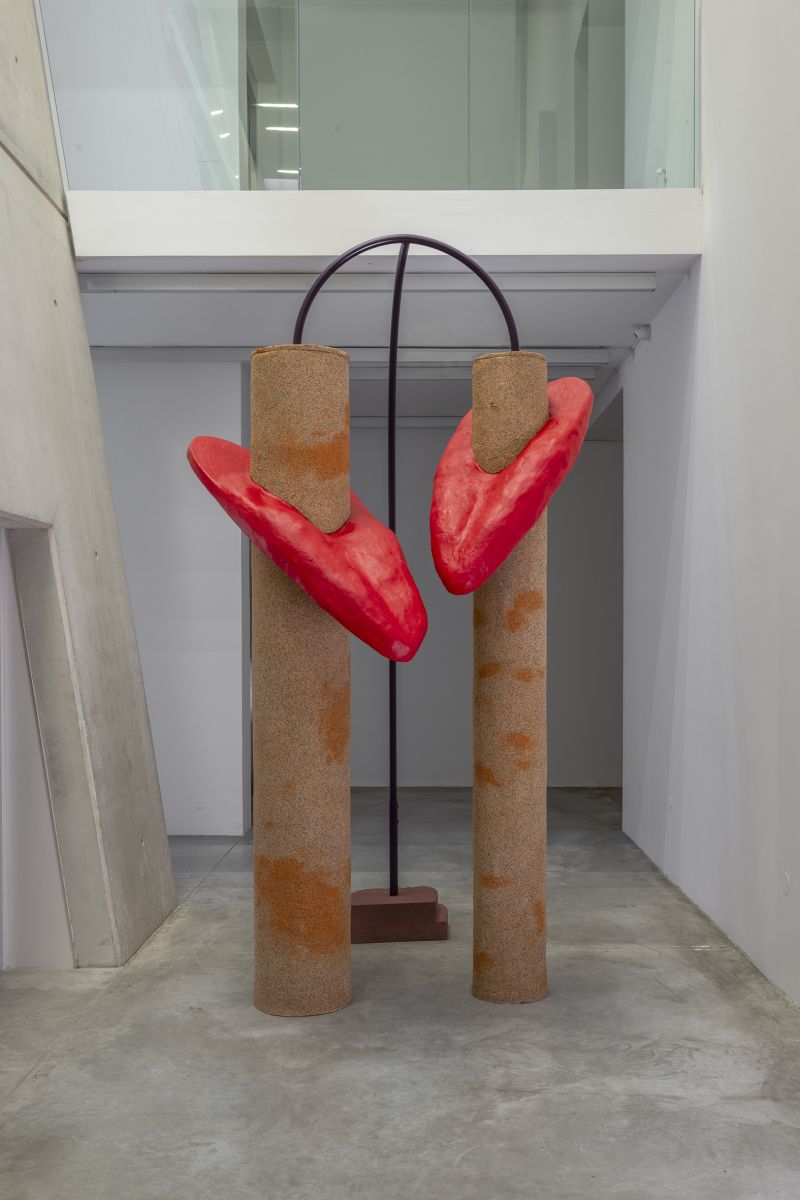
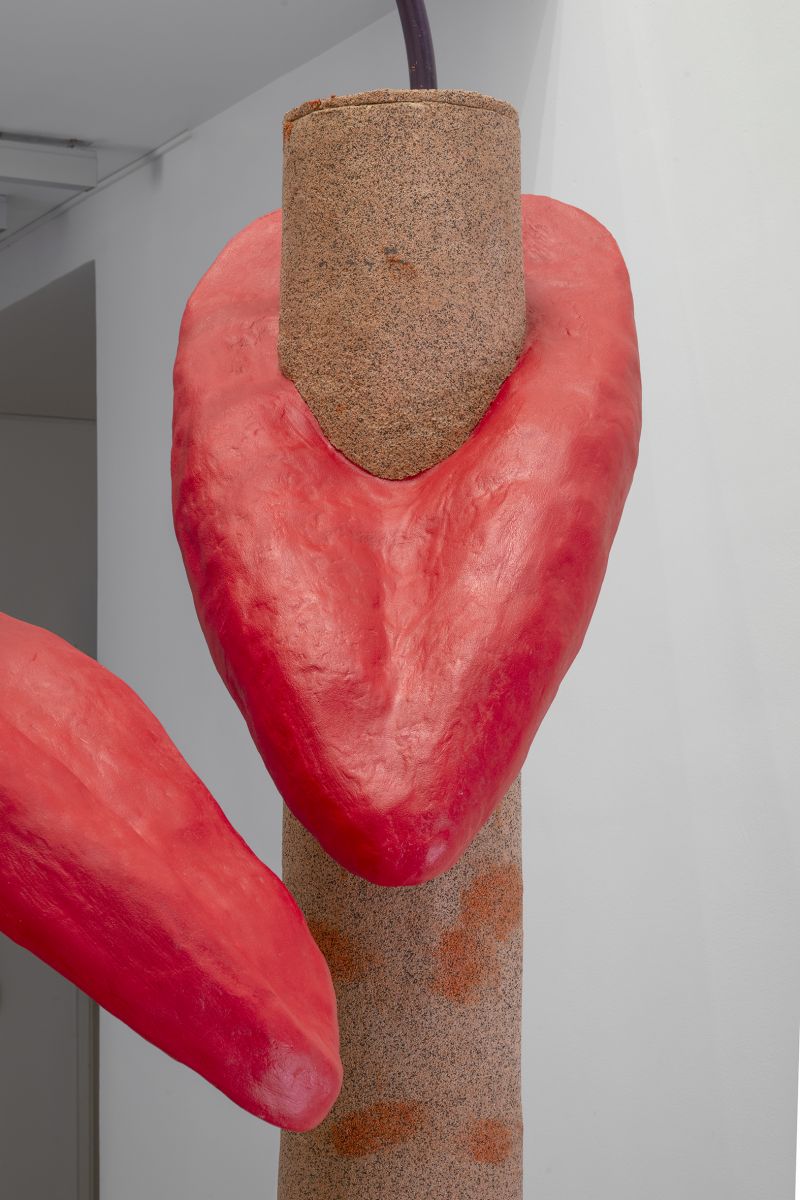
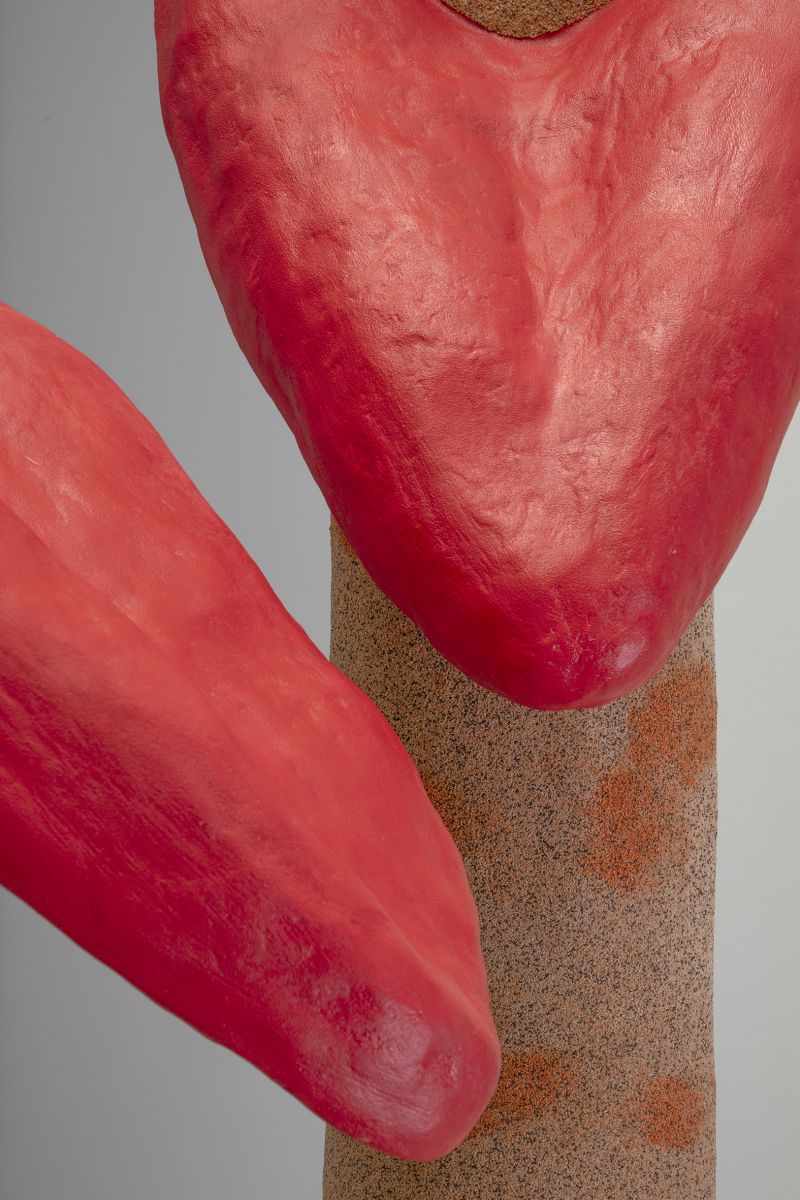
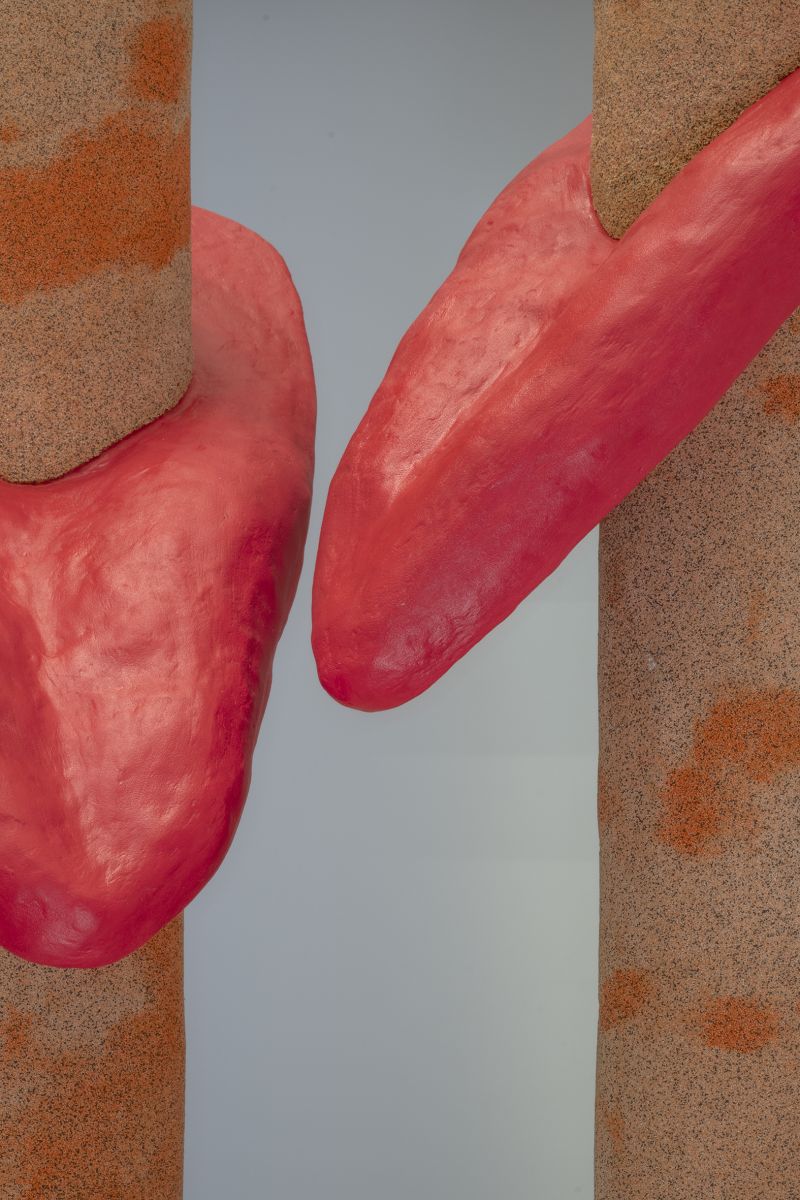
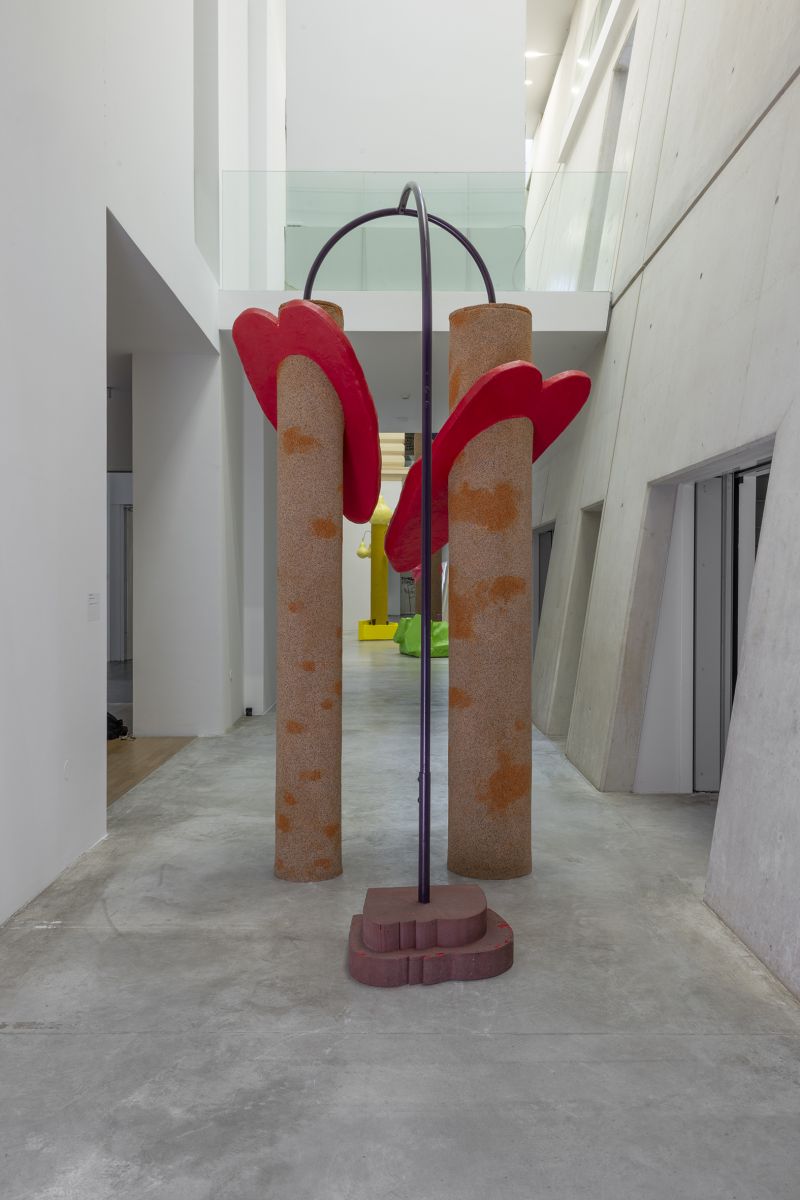
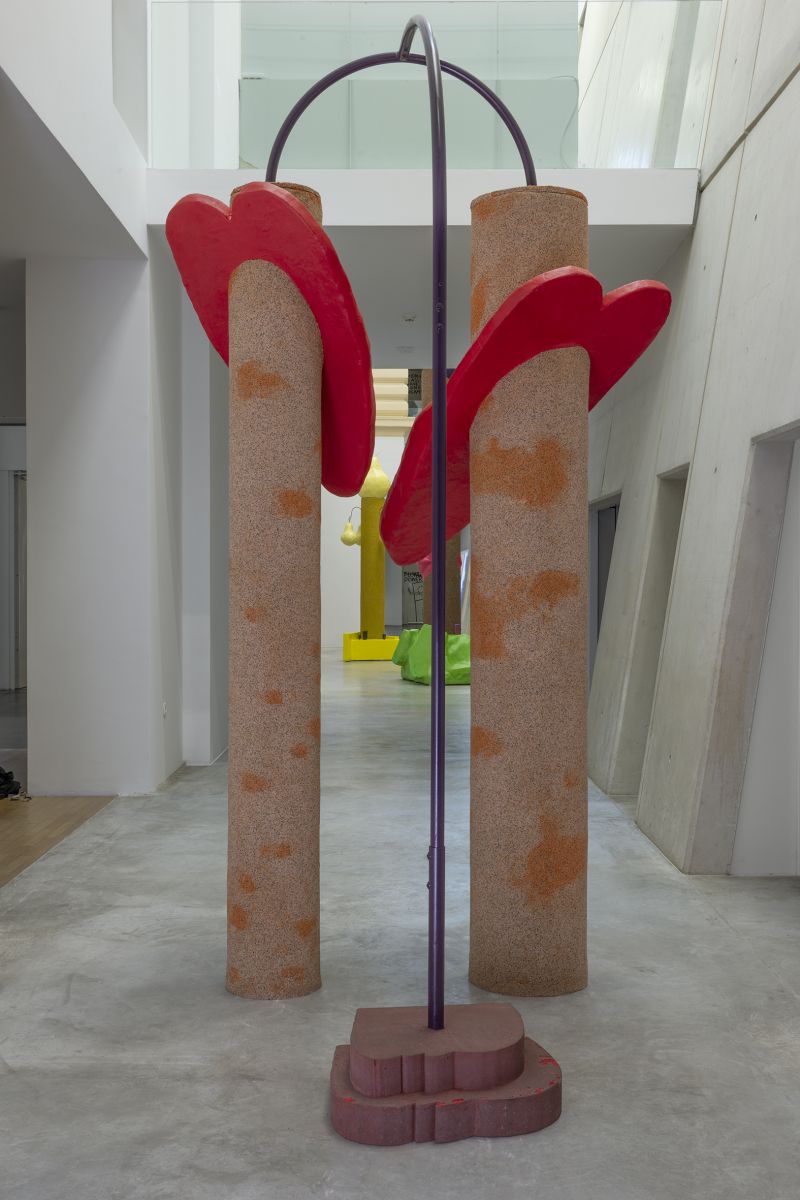
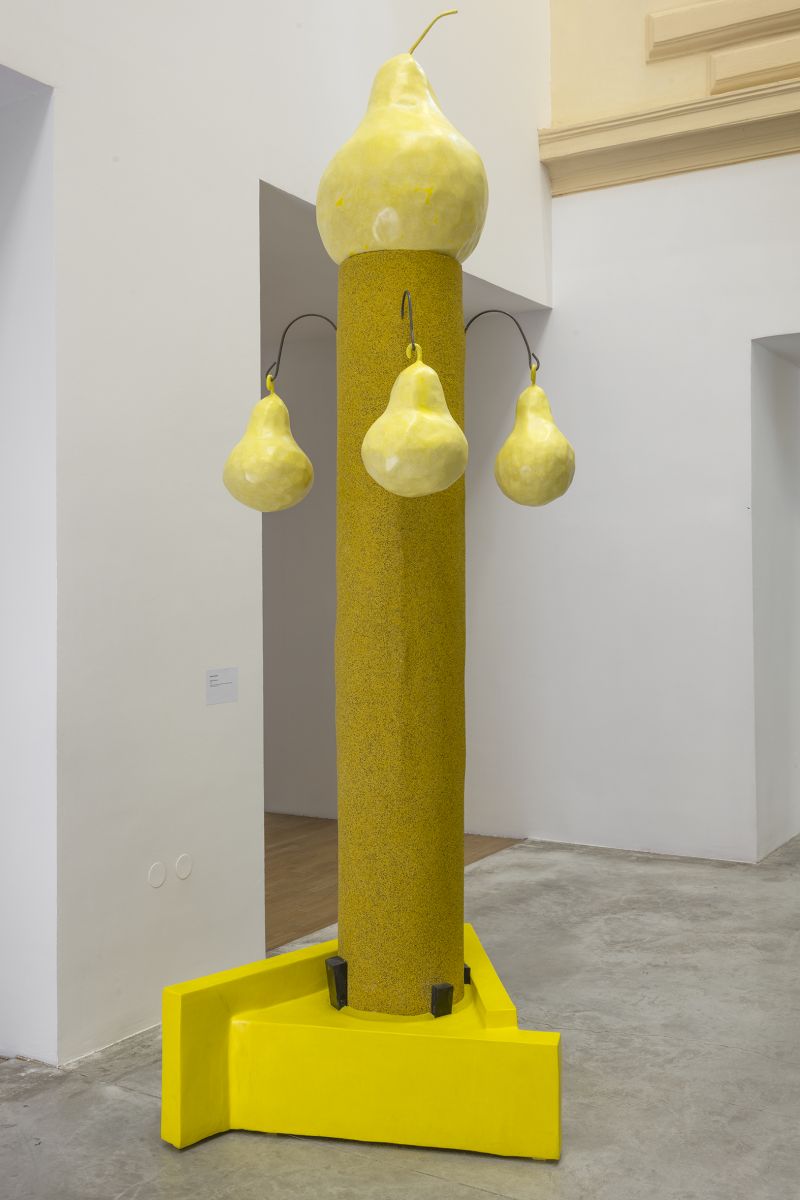
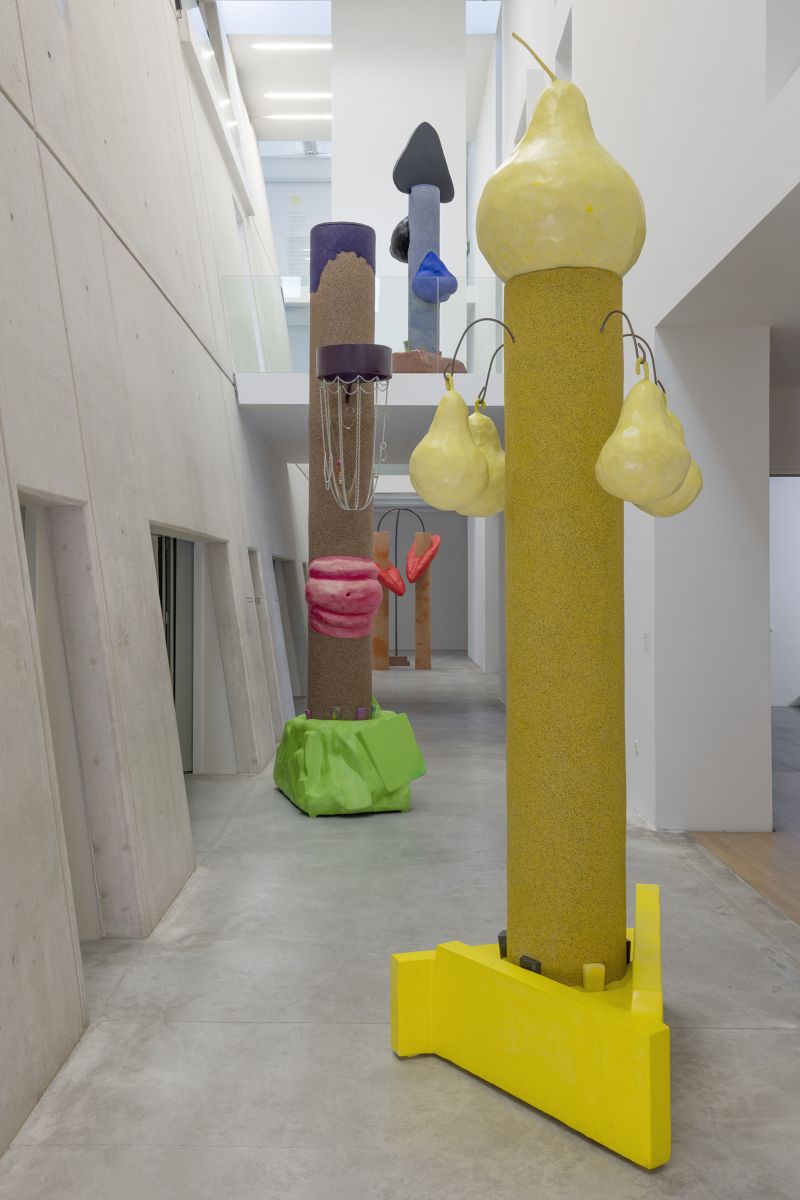
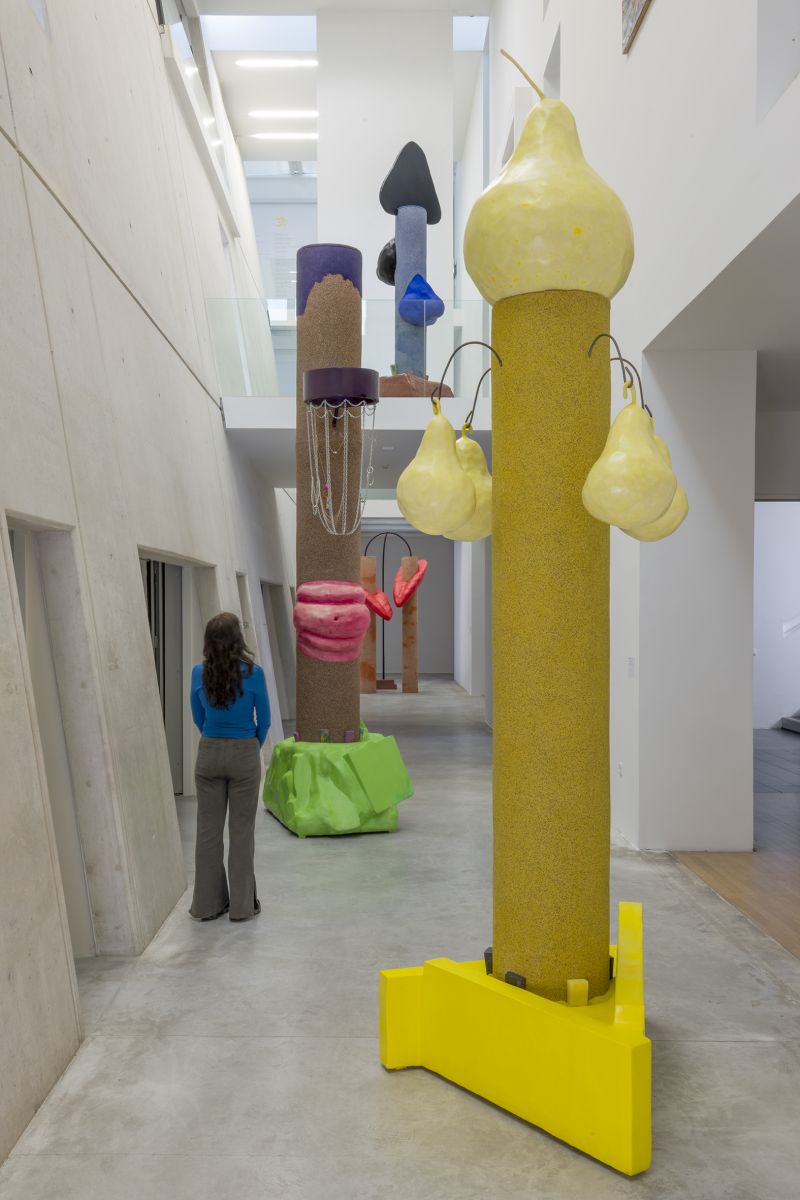
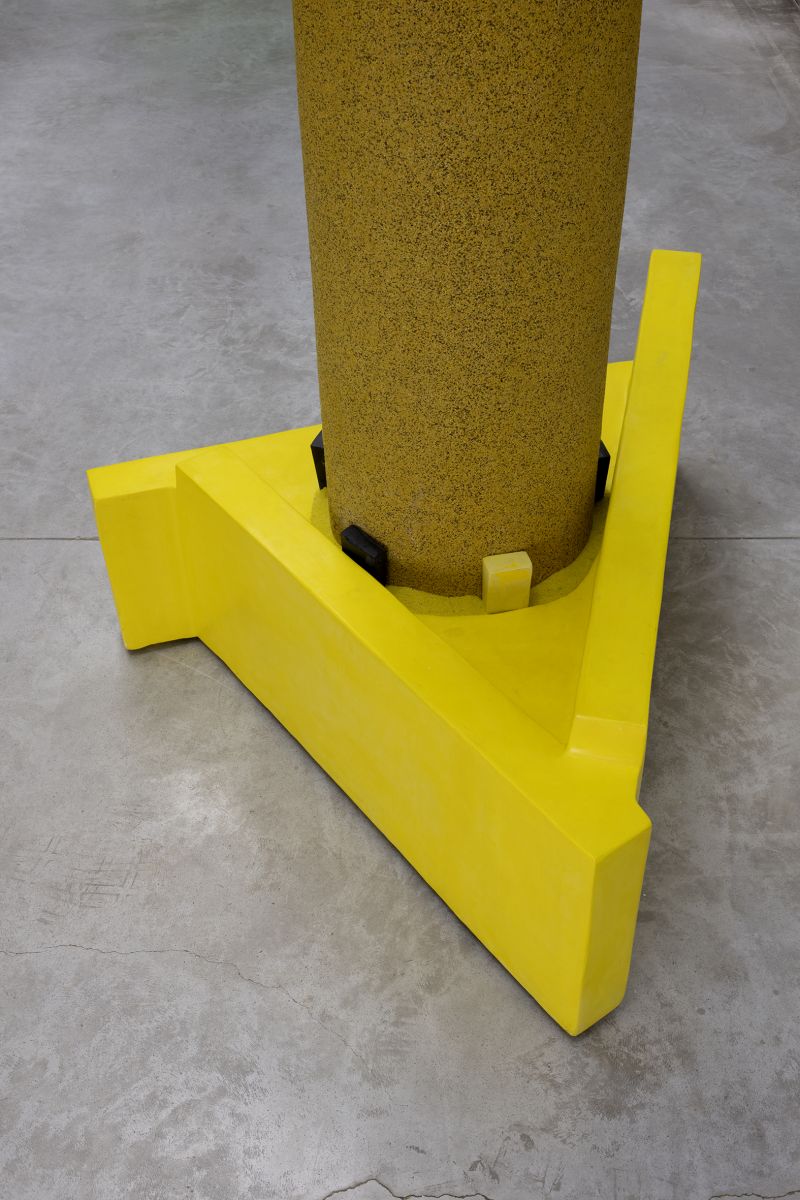
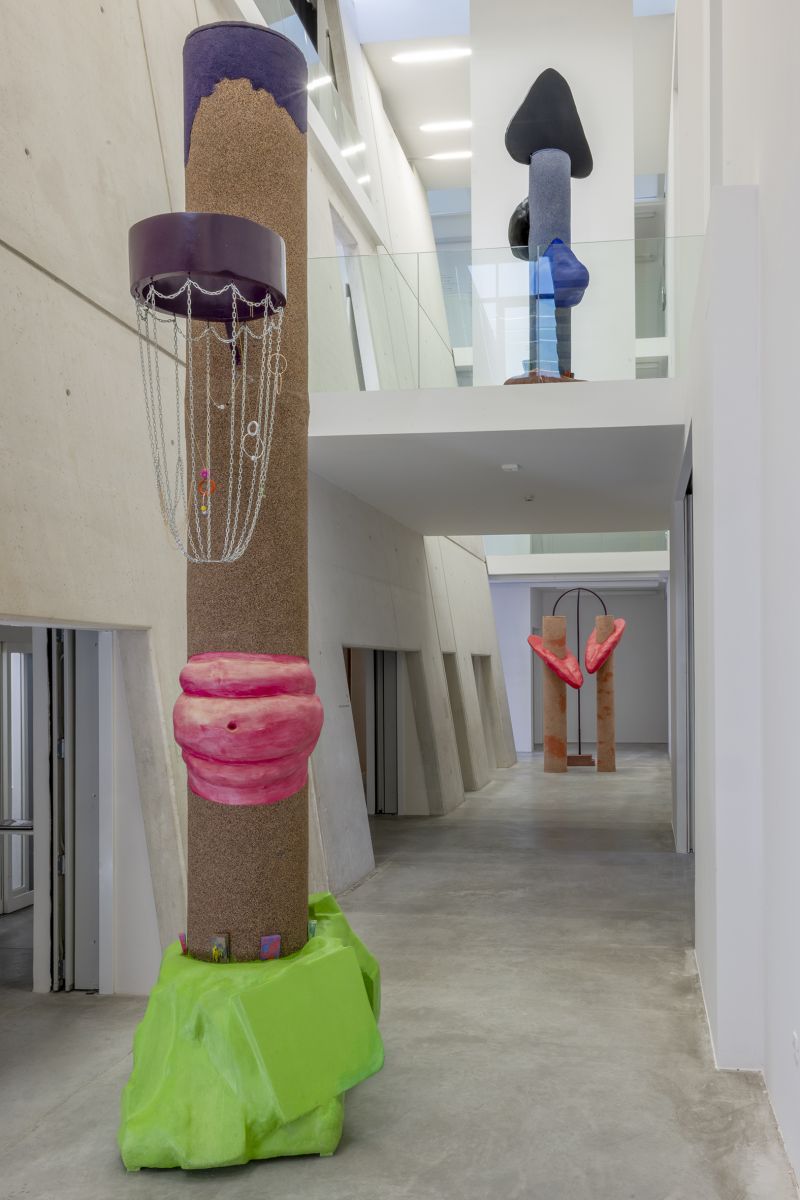
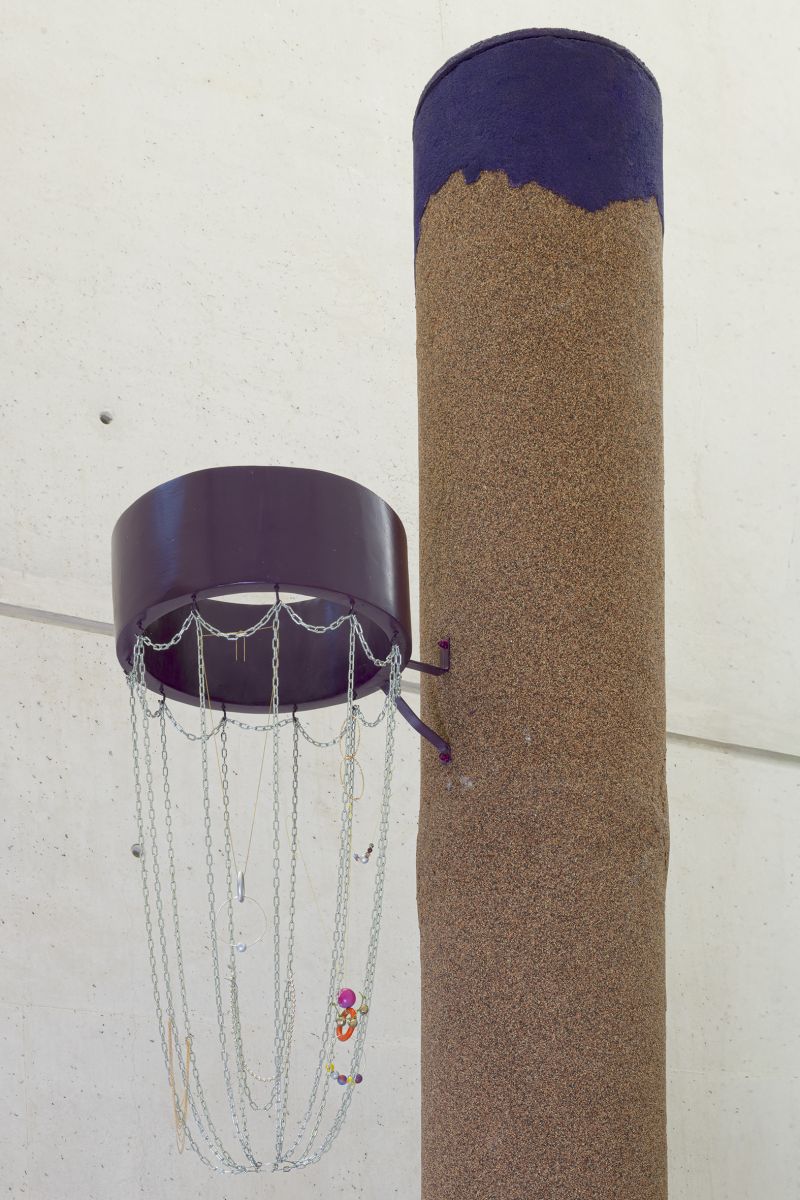
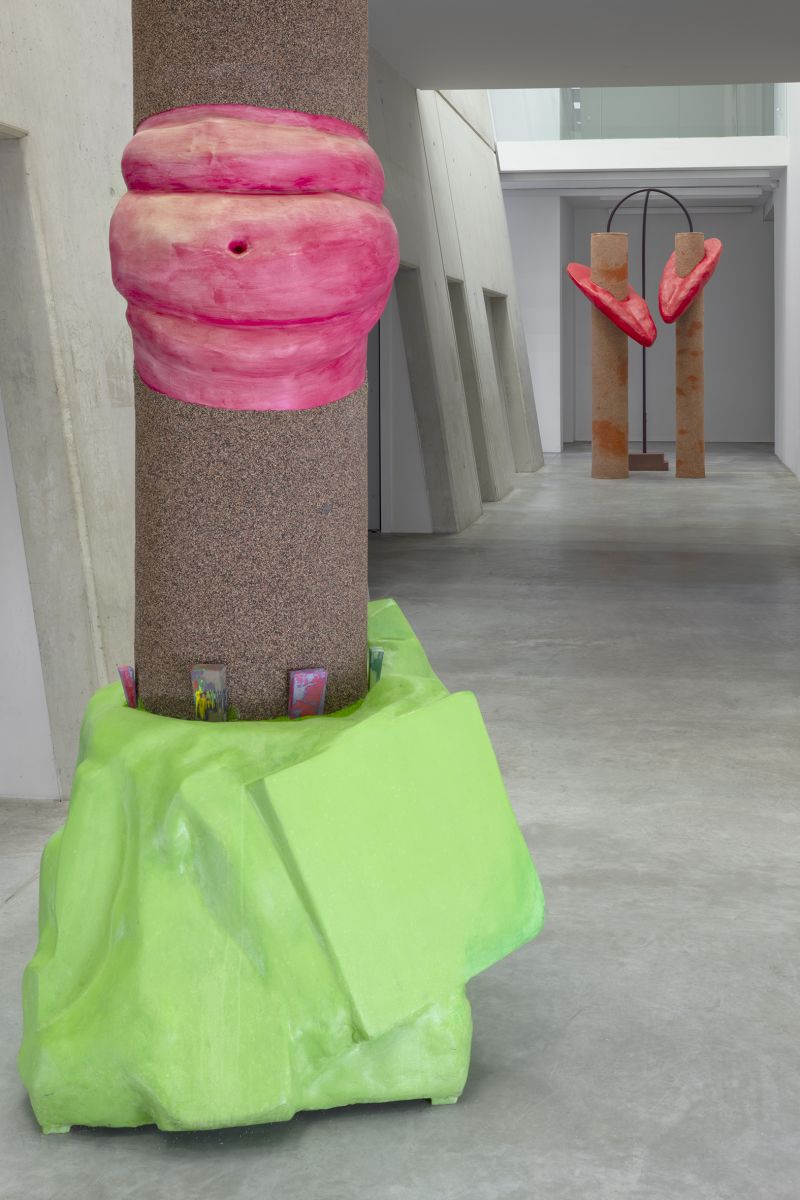
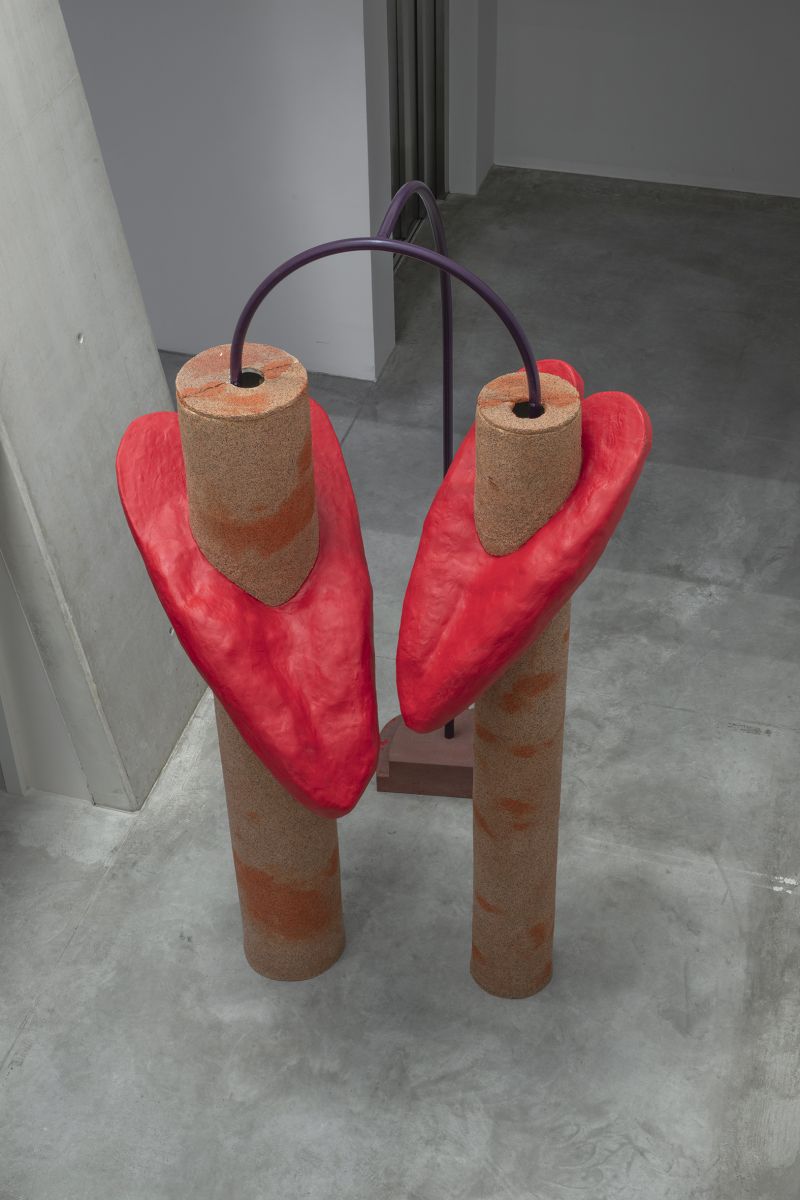
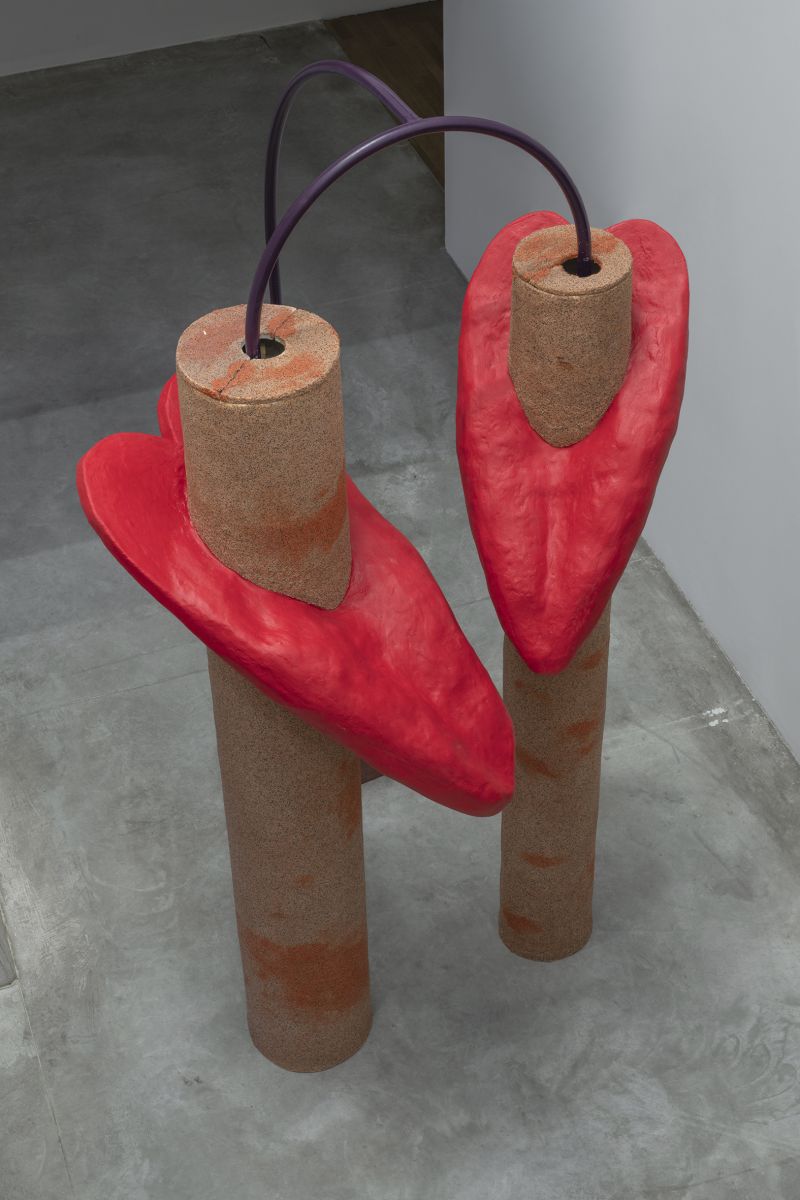
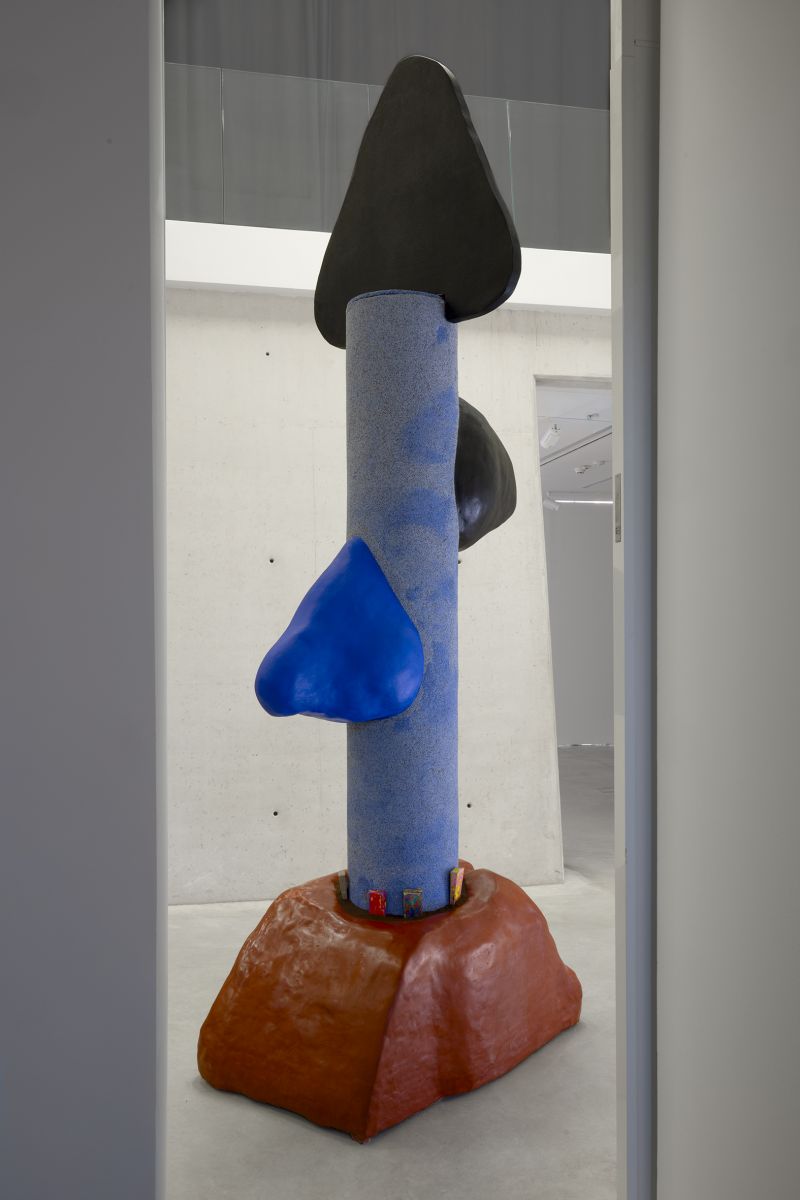
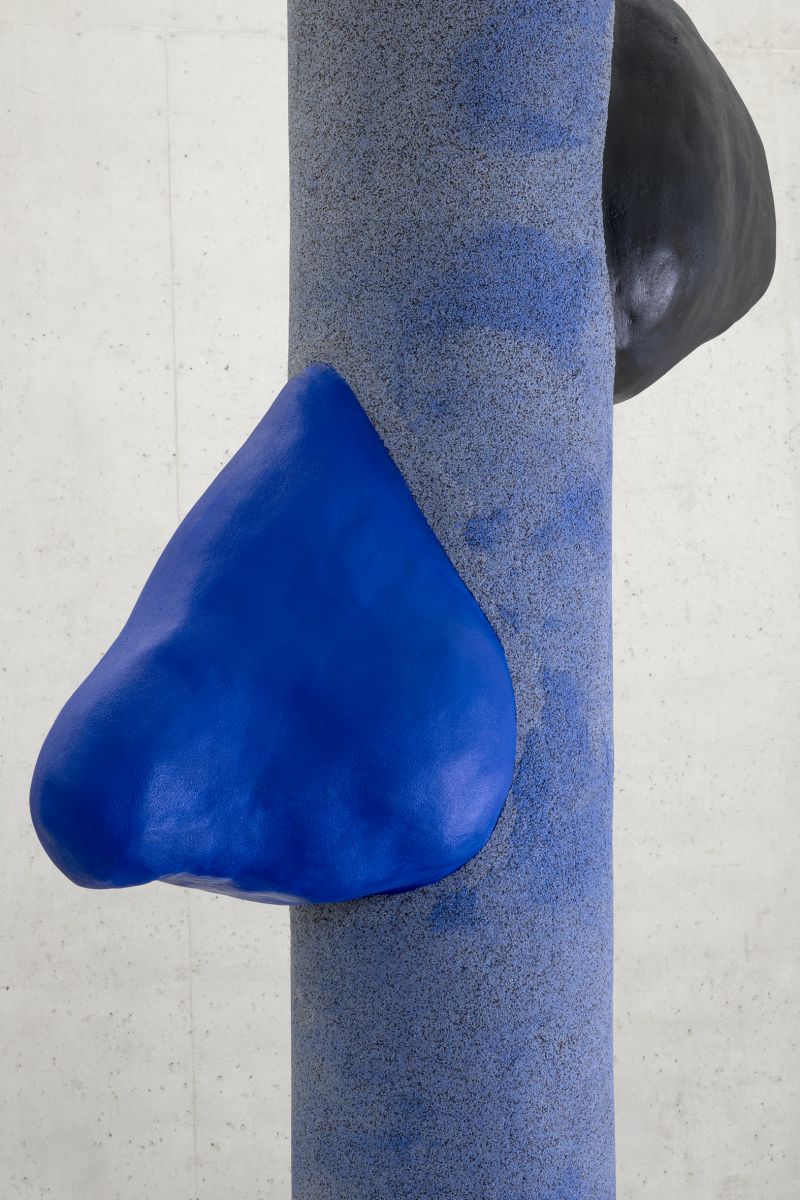
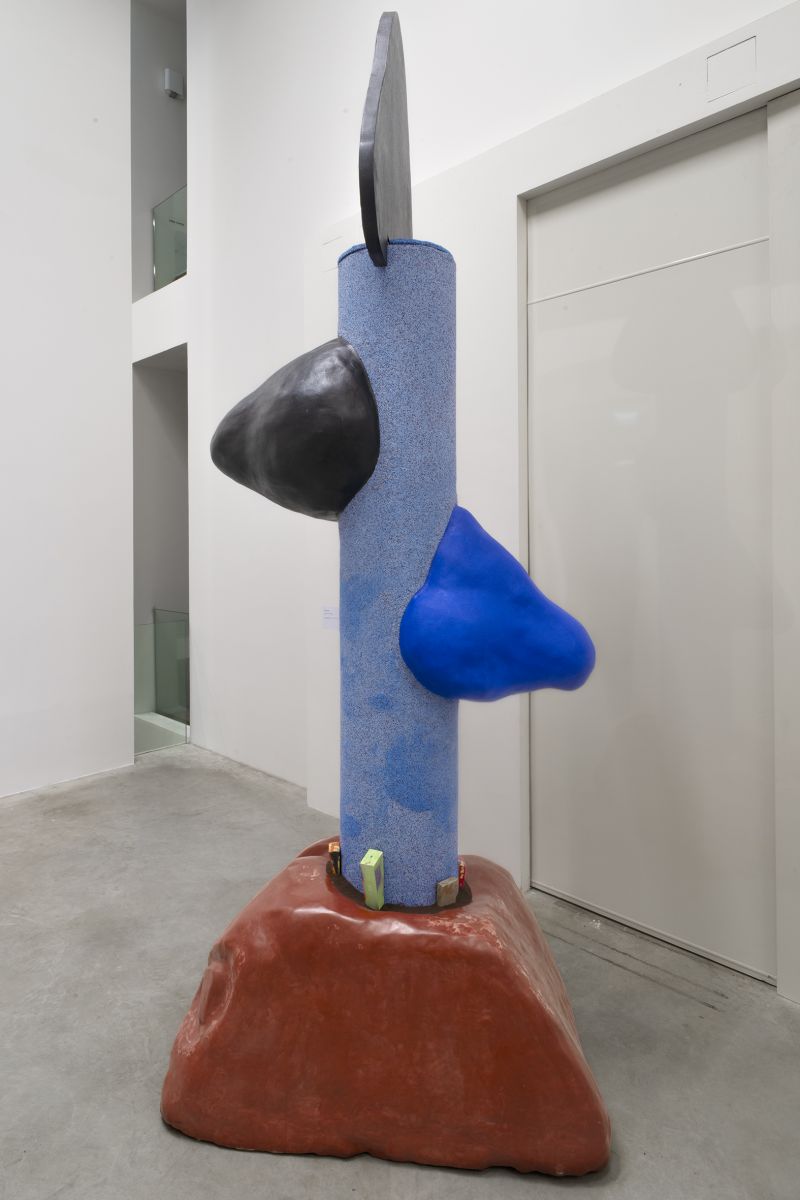
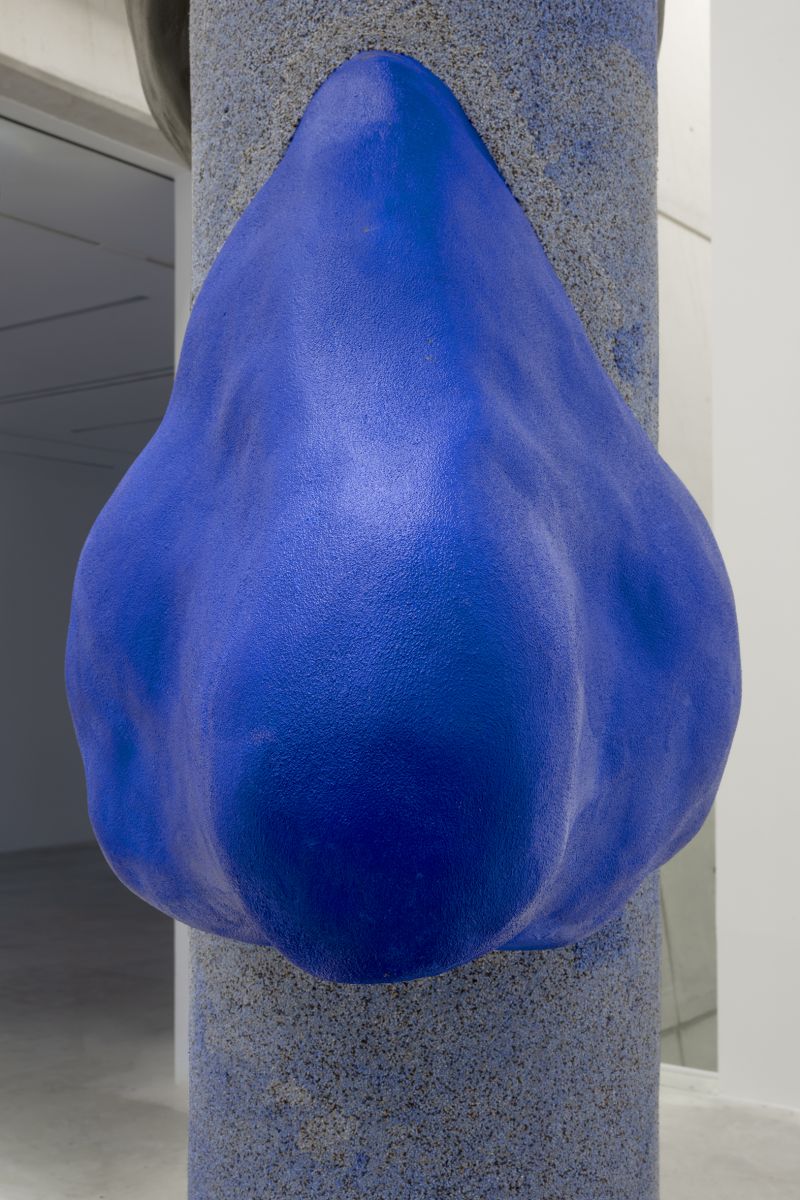
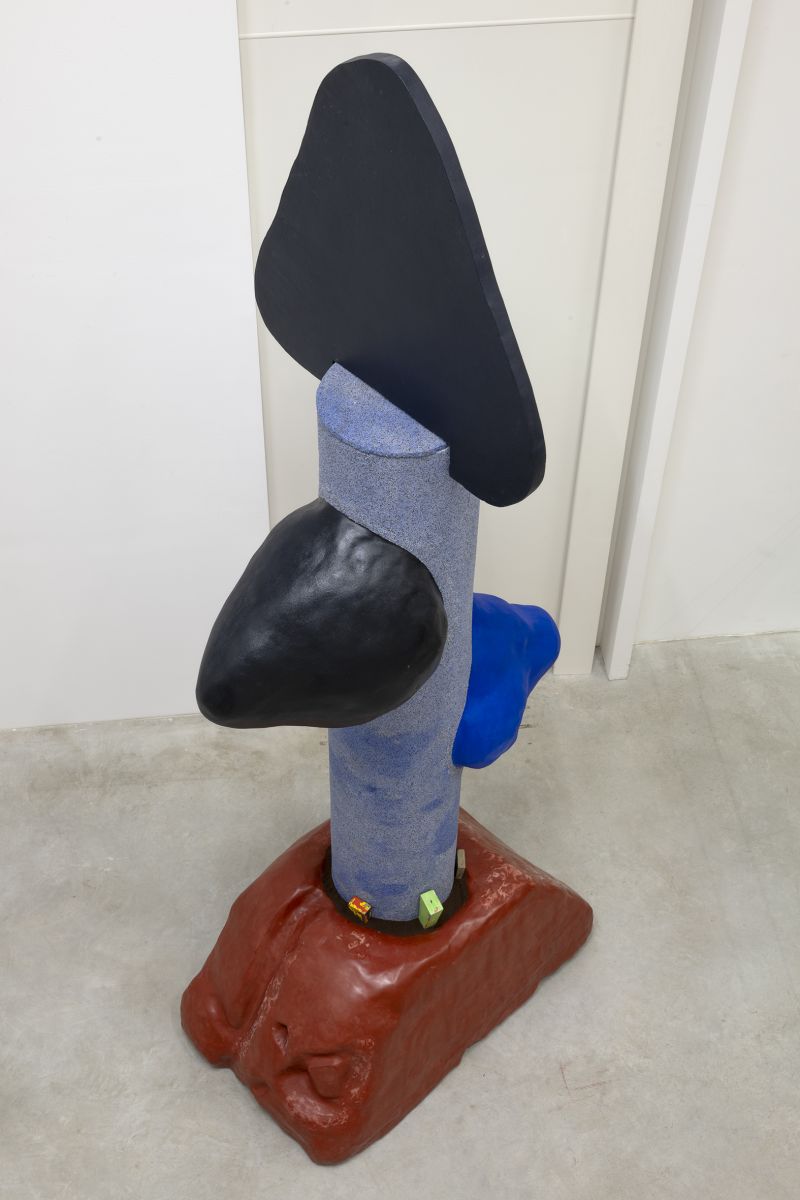
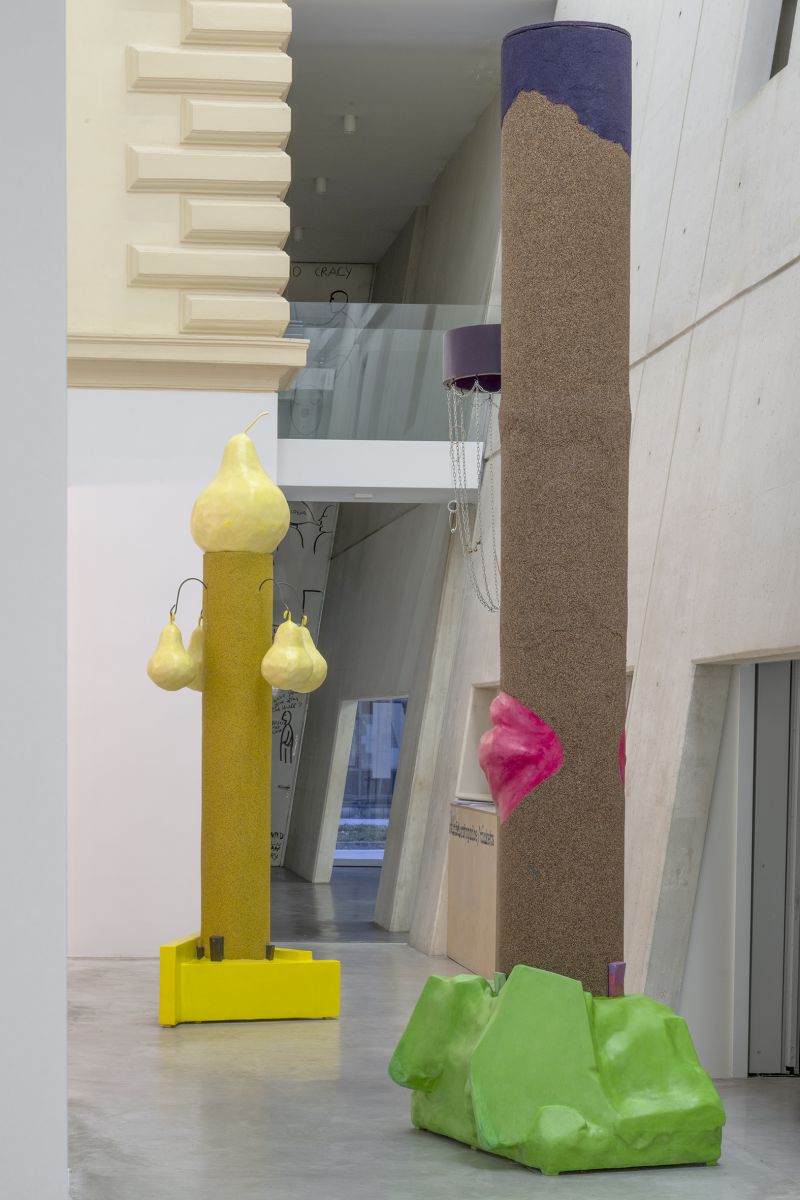
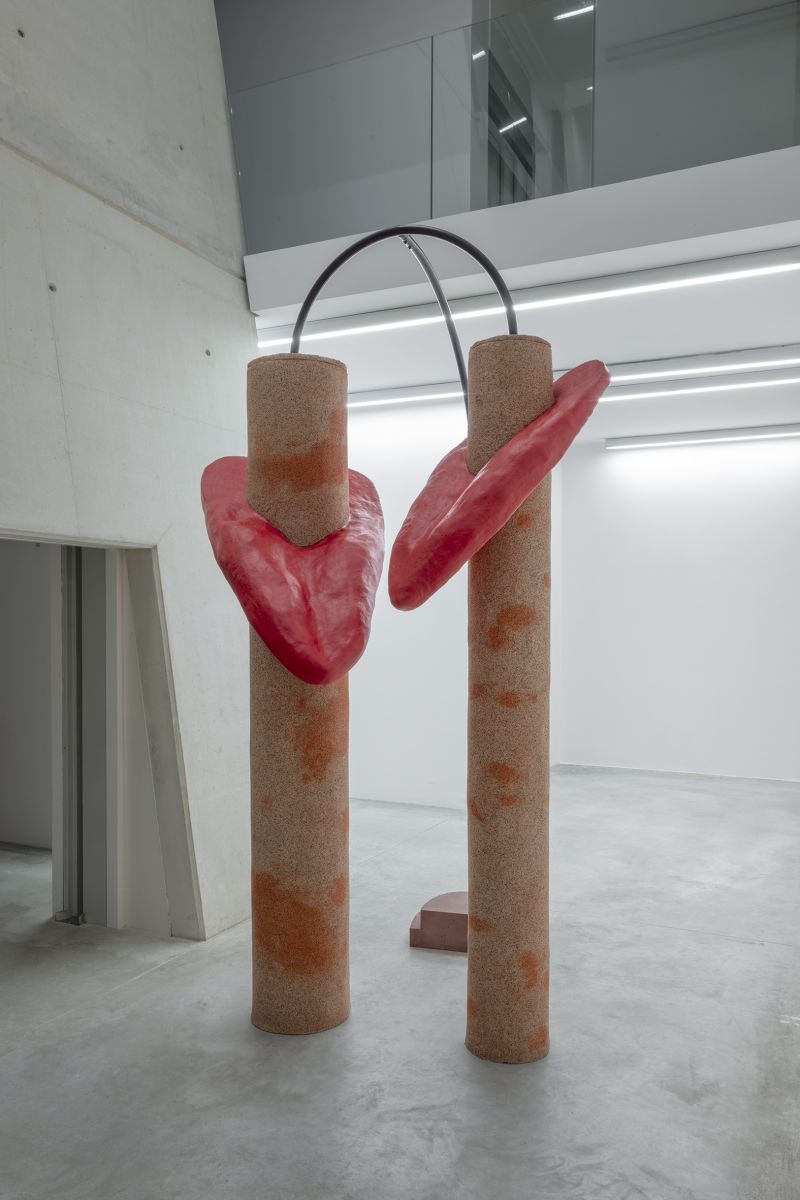
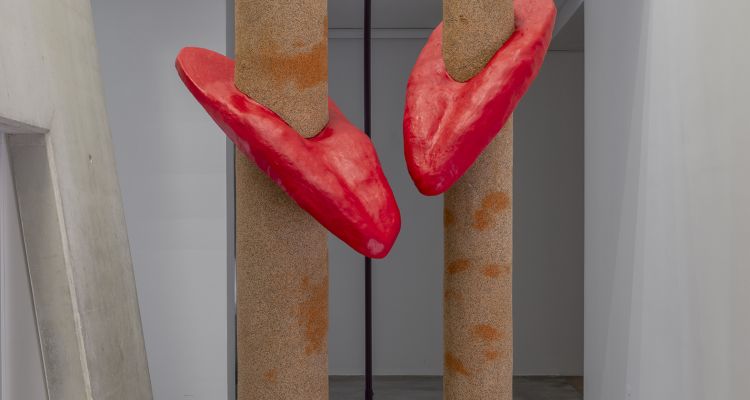
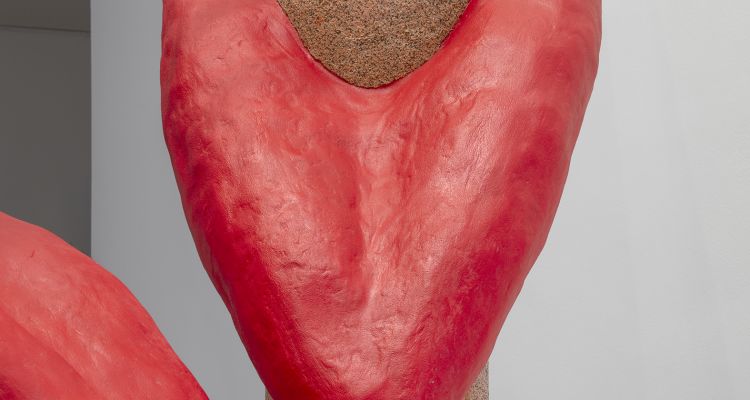
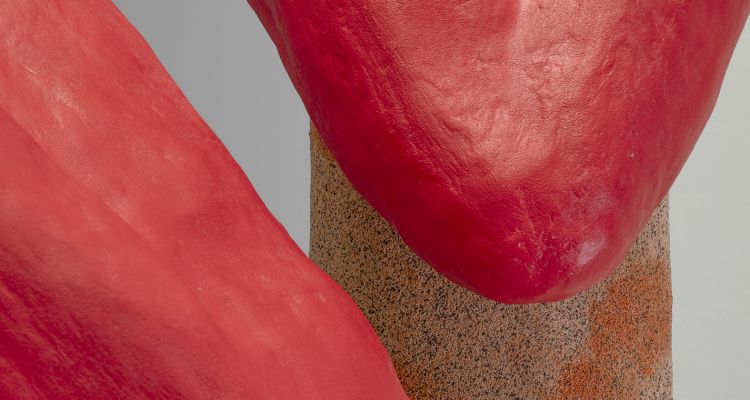
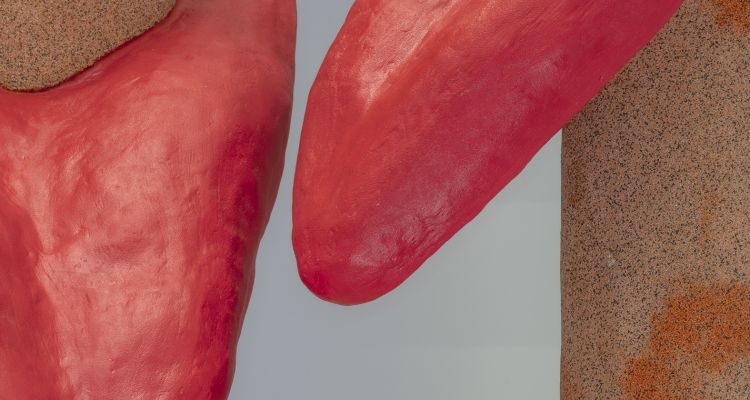
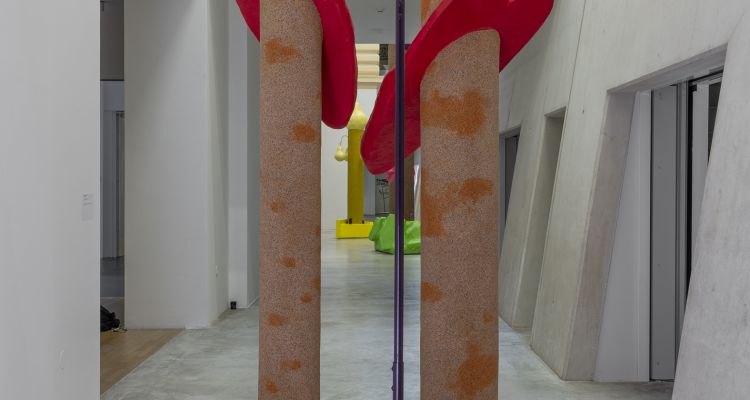
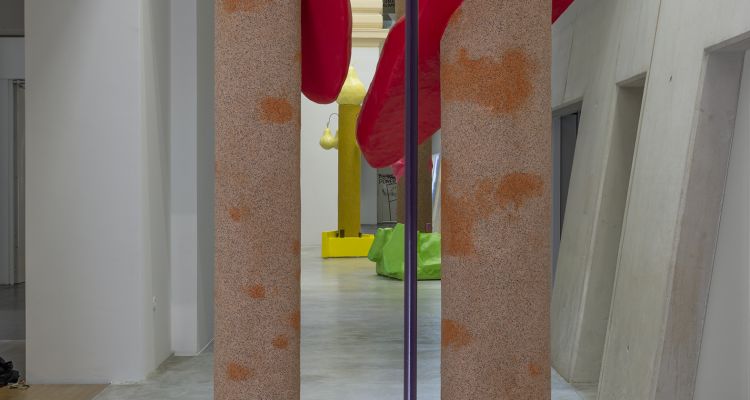
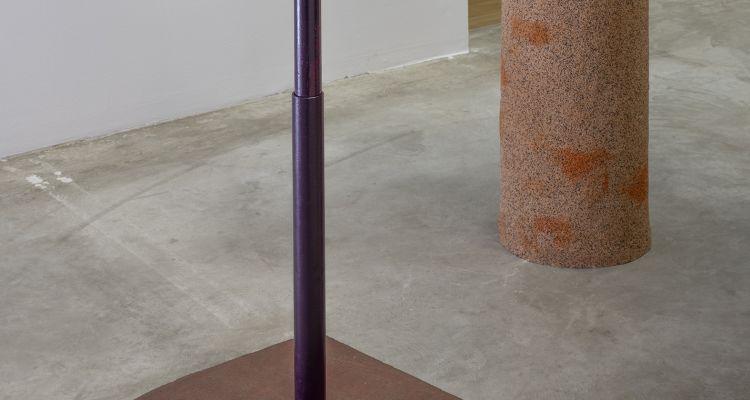
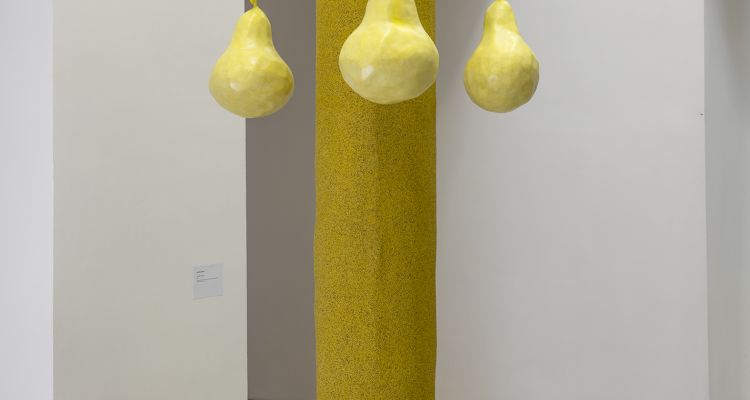
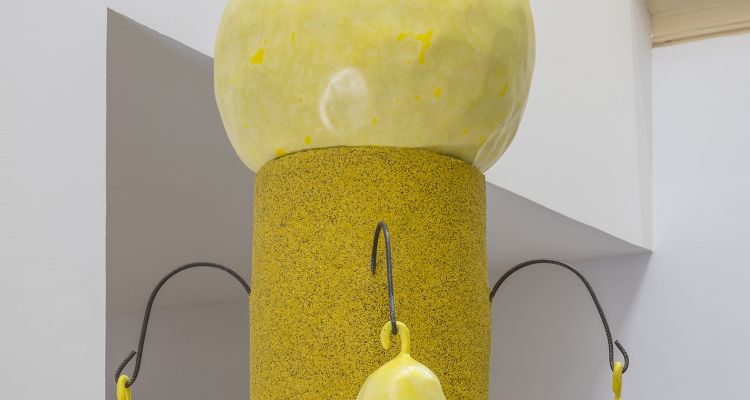
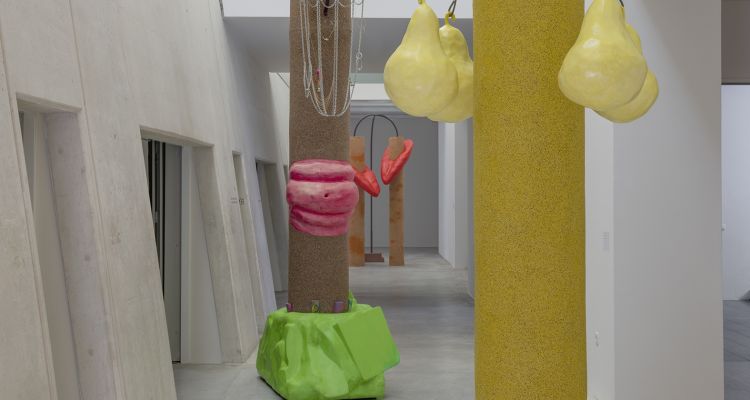
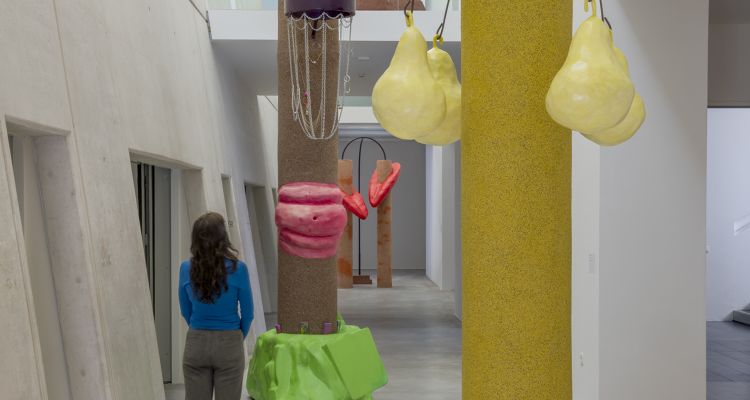
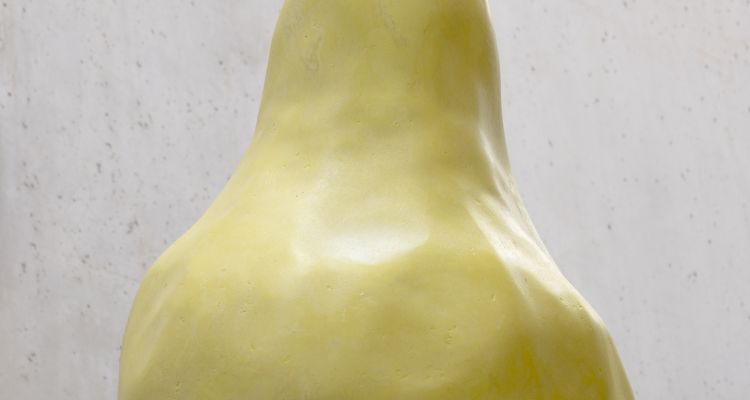
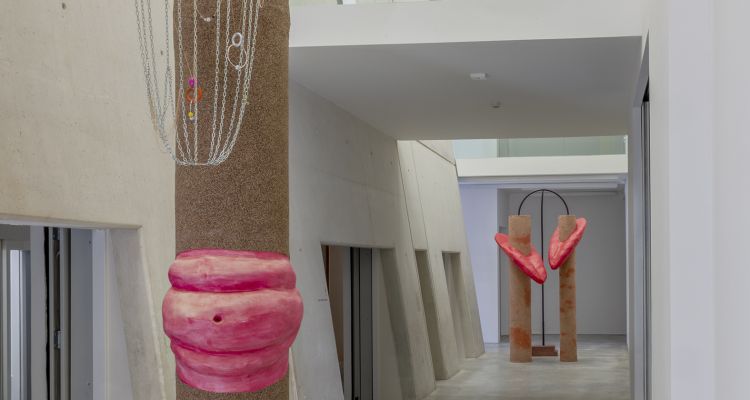
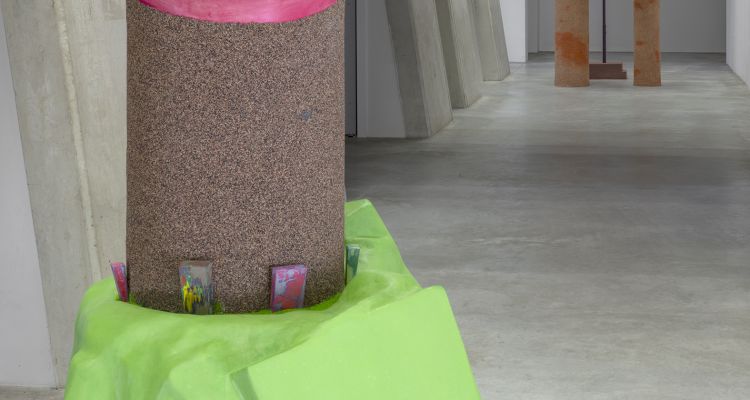
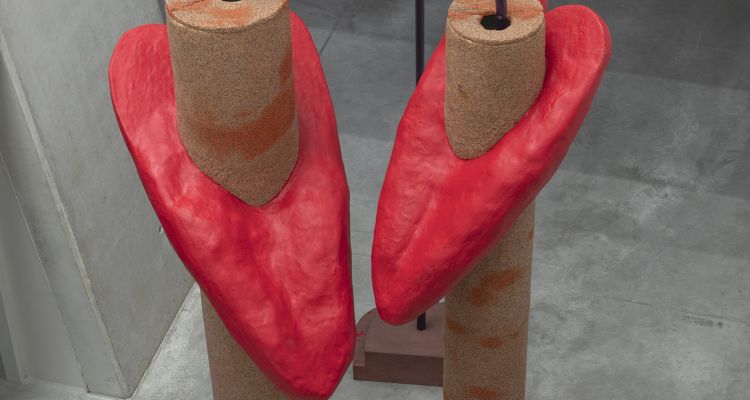
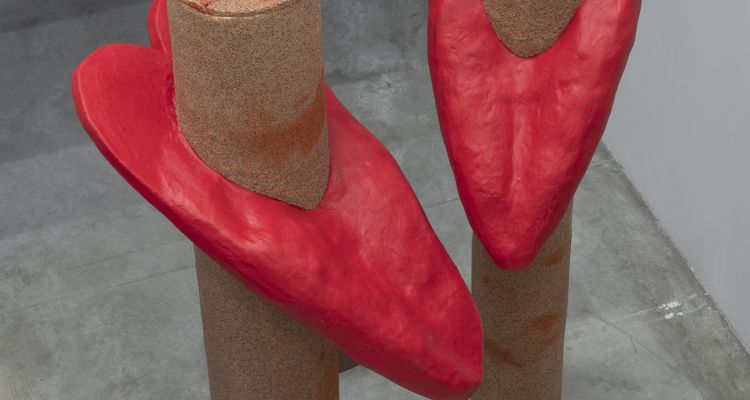
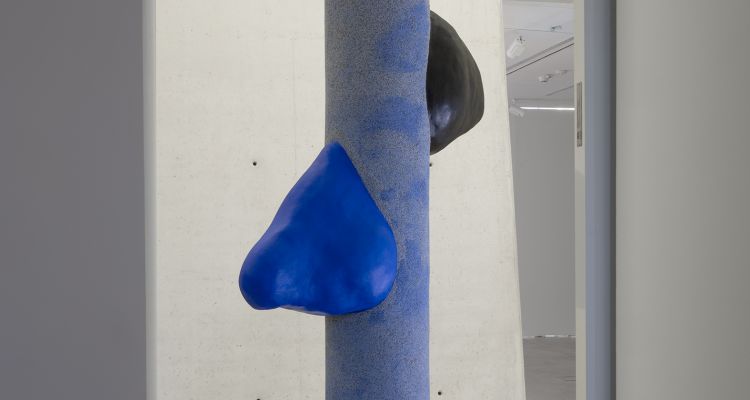
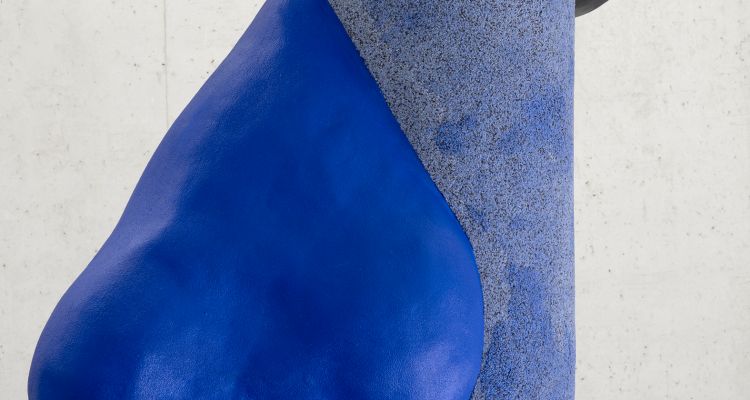
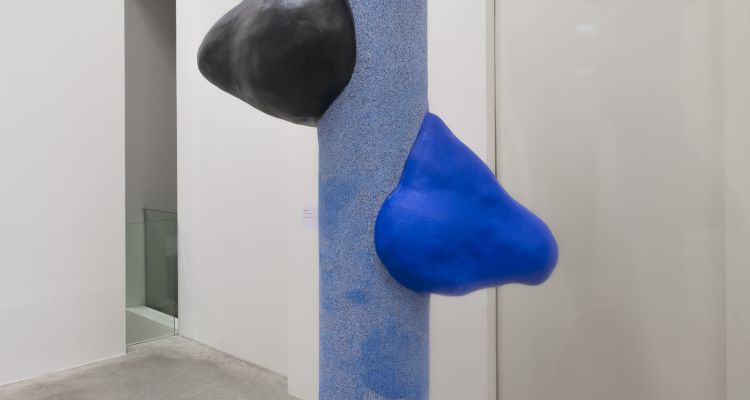
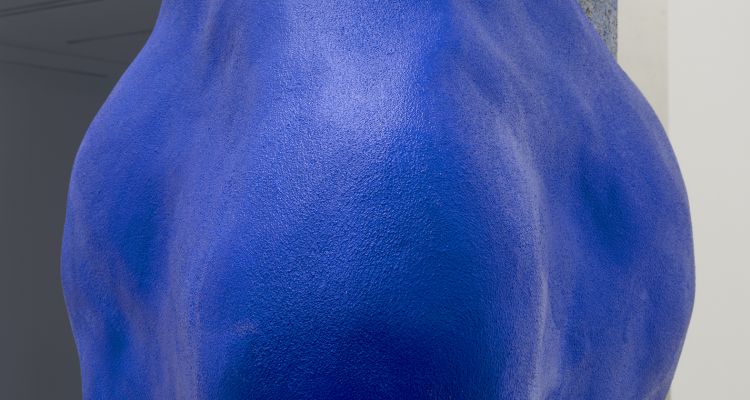
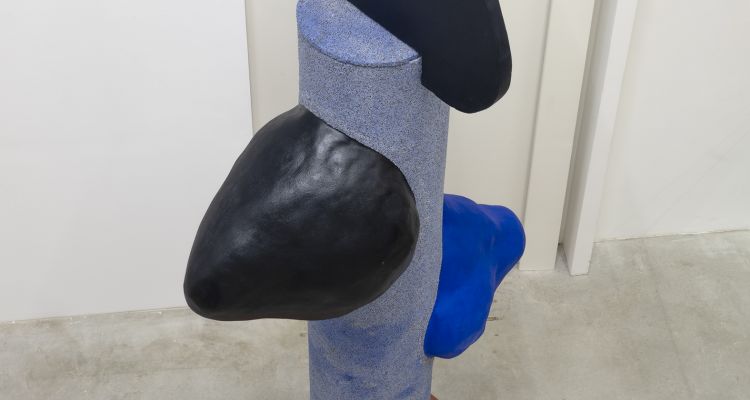
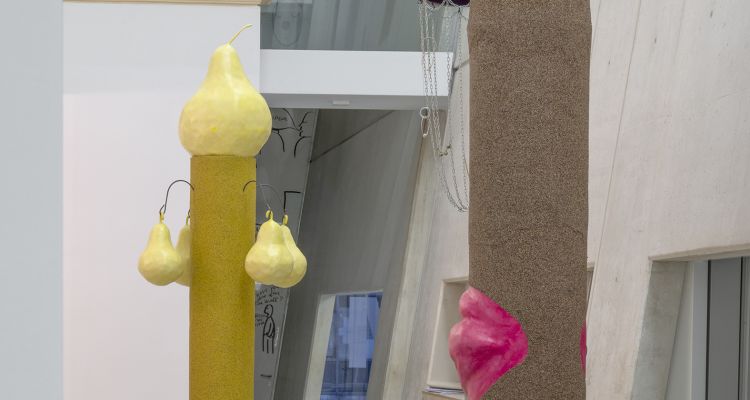
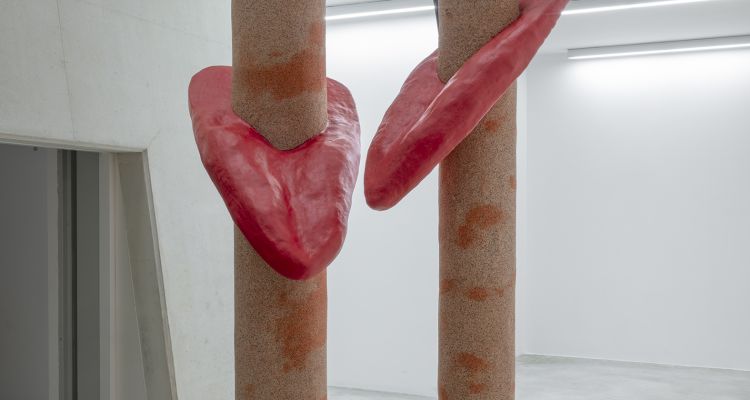
As part of the exhibition Builders: A Selection from a Collection, a series of four works by the artist Maruša Sagadin titled Luv Birds and Blind Spots (2023) are currently on display, namely Bad Joke (2023), Luv Bird (Belly) (2023), Luv Bird (Noses) (2023), and Luv Bird (Tongues) (2023).
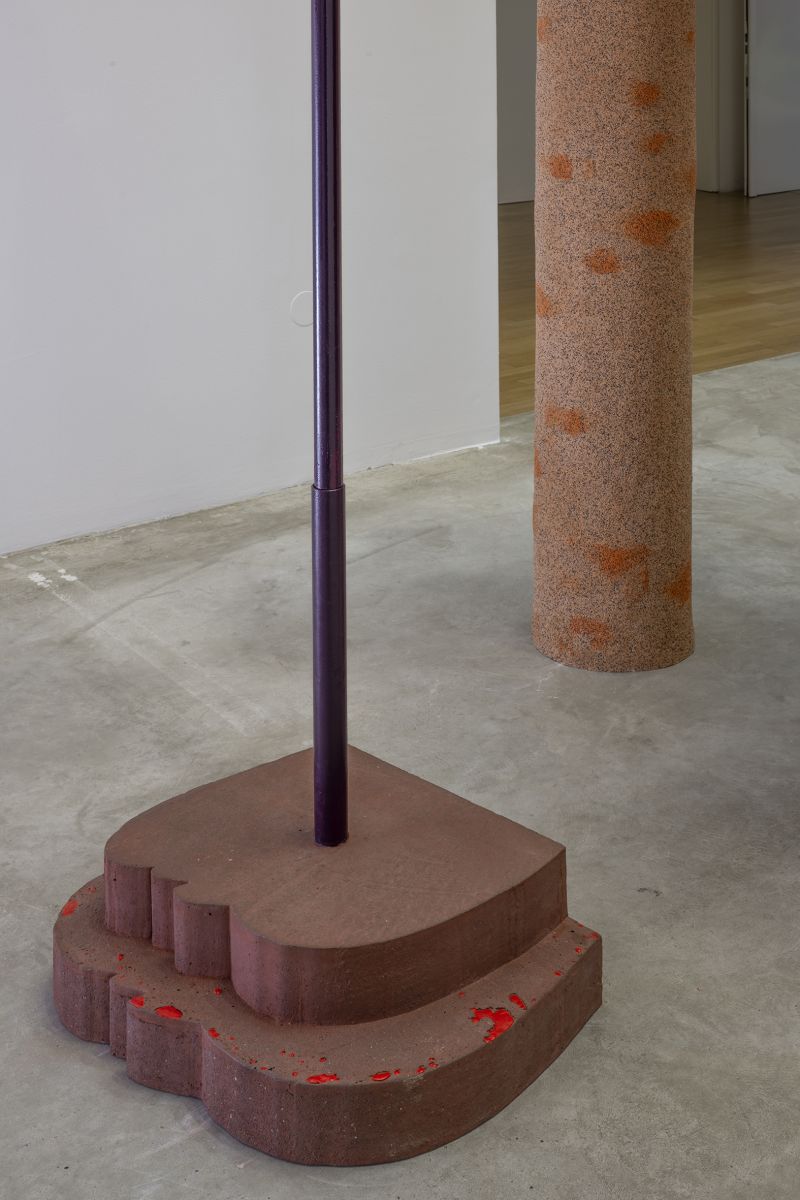
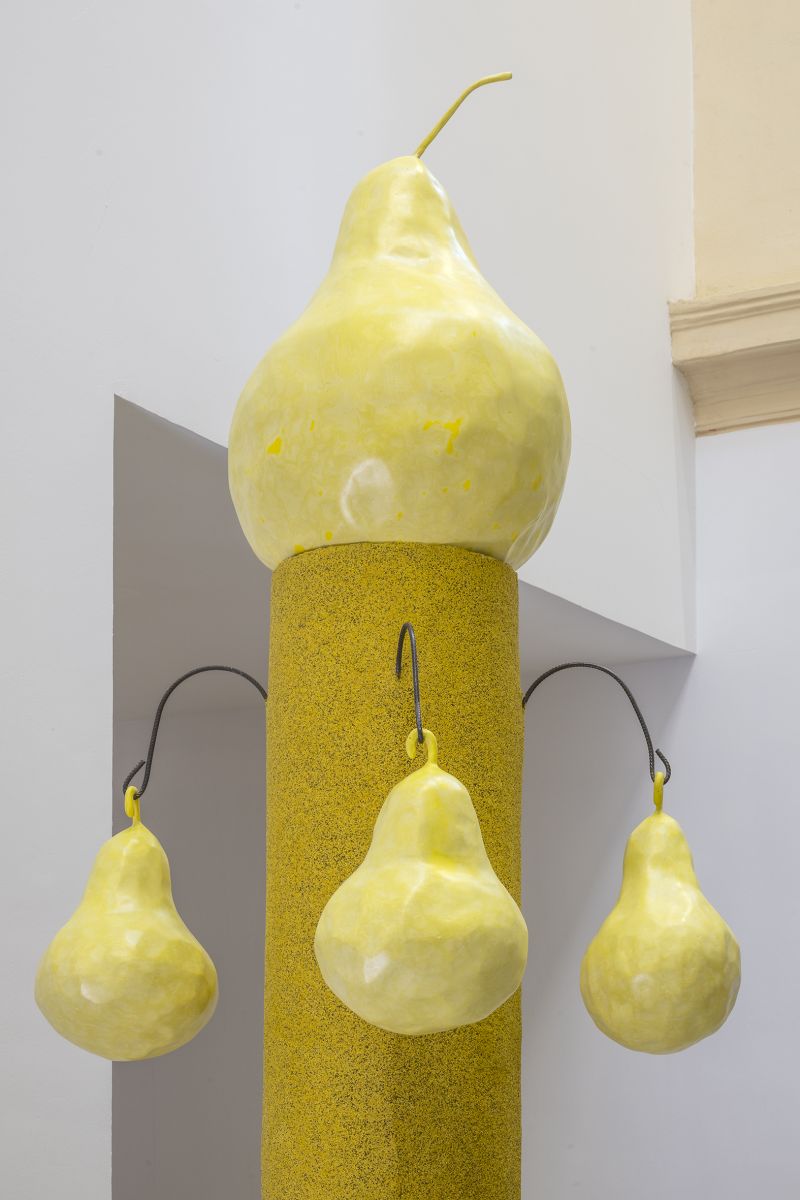
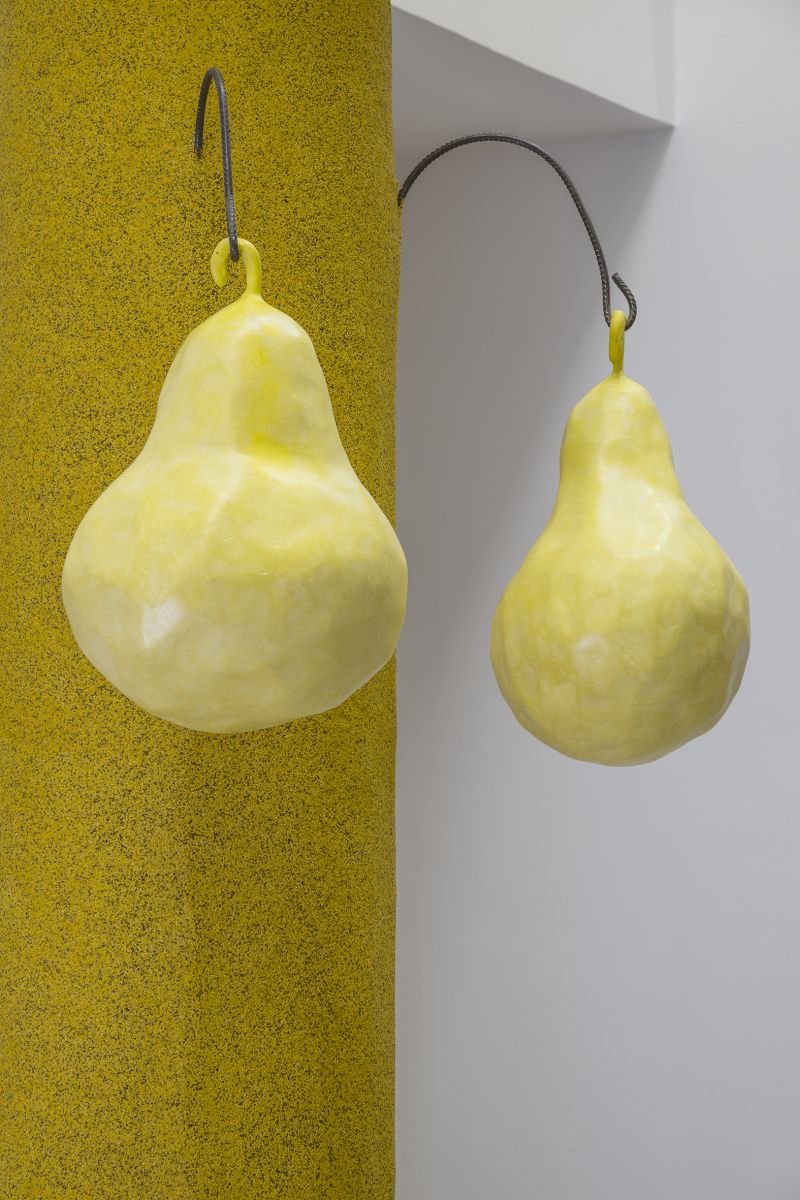
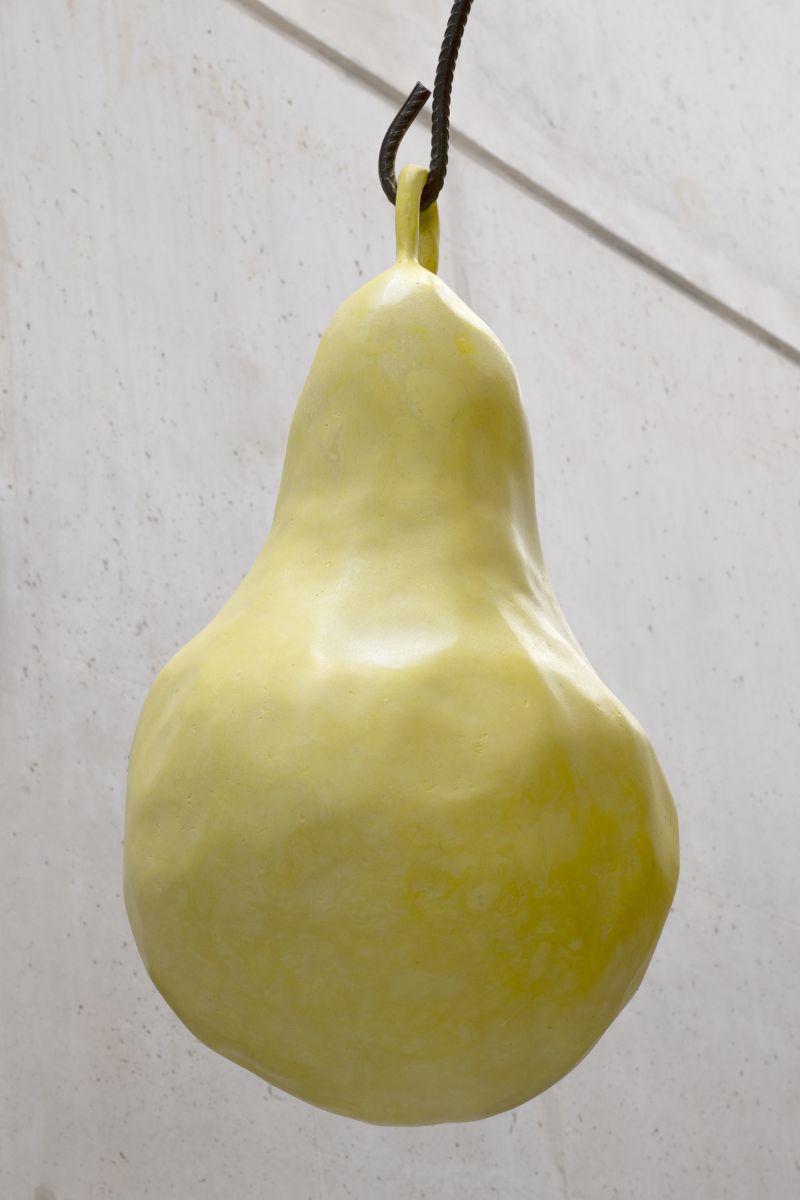
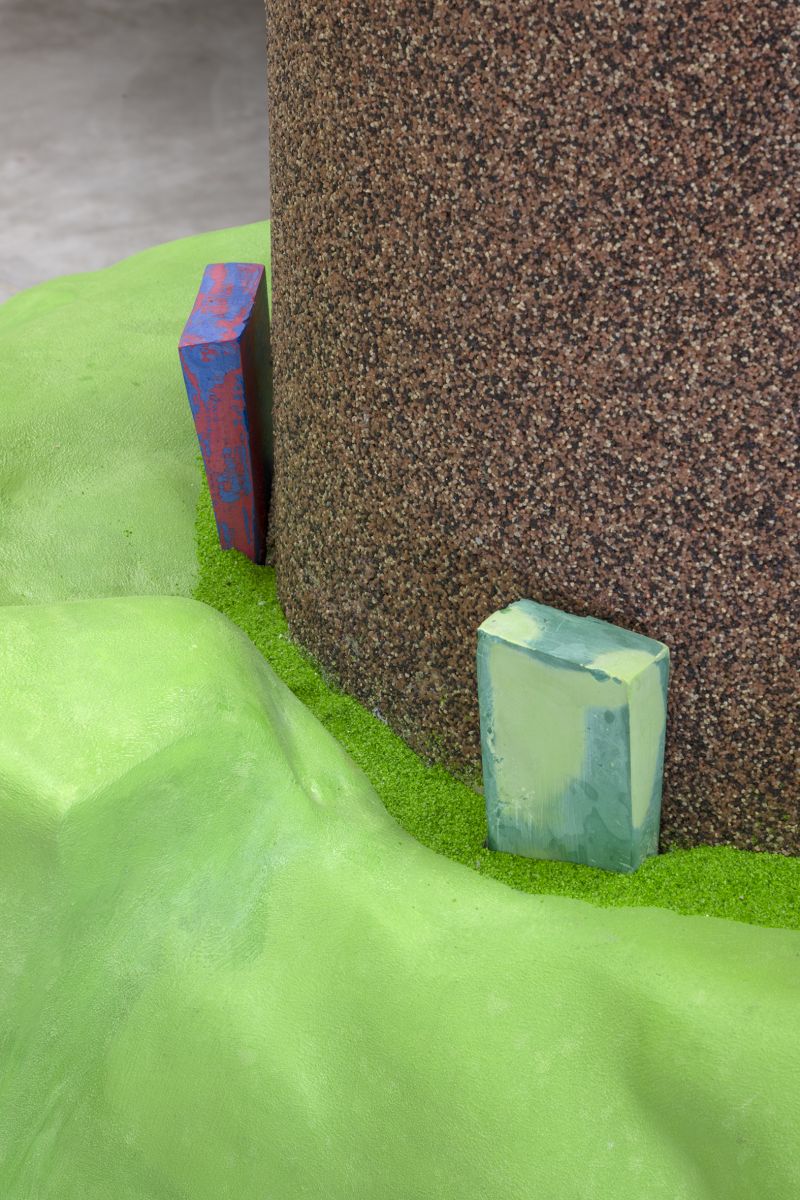
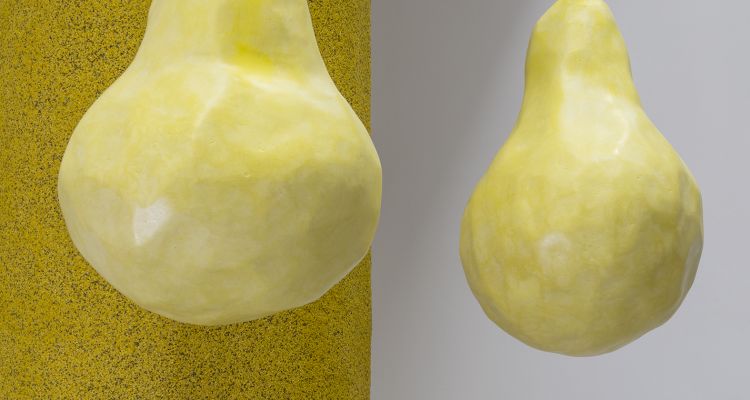
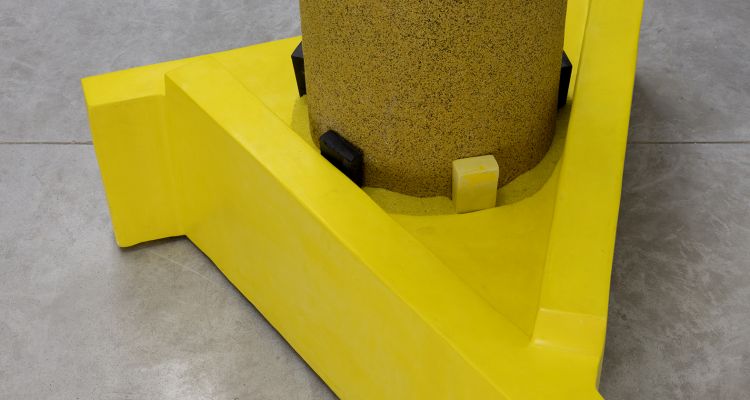
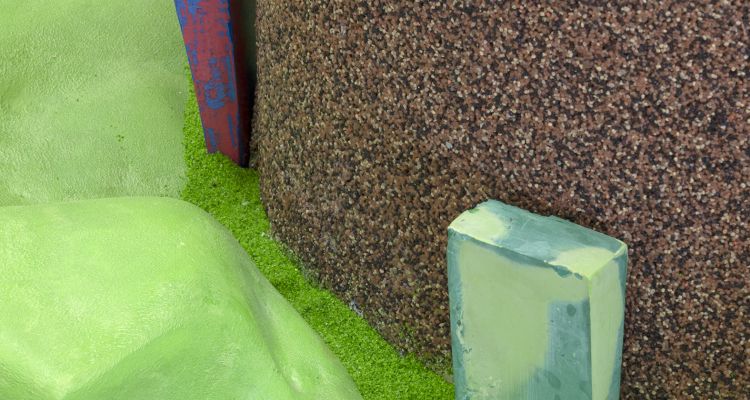
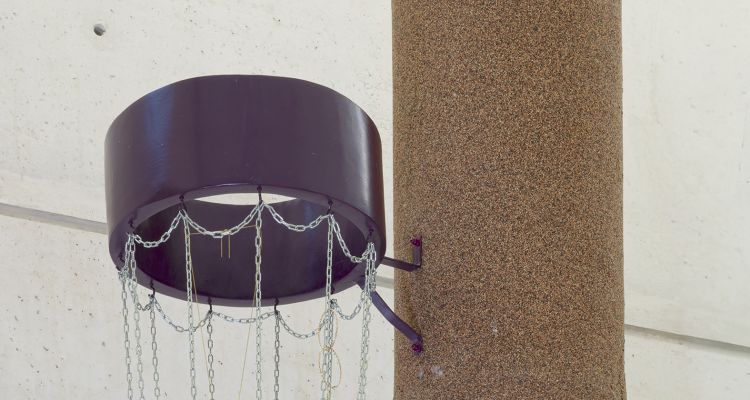
In the installation, Maruša Sagadin references architectural elements from public spaces, such as columns, arches, facades and benches. These forms are not simply translated; instead, their basic structure is expanded. As a result, physical shapes such as blue noses, pink bellies and tongues repeatedly appear on the pillars – the Luv Birds. The body parts, which stand out in color in contrast to the plastered column bodies, are further emphasized by their smooth, shiny surface. However, it is not only the physicality of the three-dimensional sculptures that attracts attention, but also the new associative spaces that are constantly opening up. The tallest column in the exhibition, entitled Luv Birds (Belly), also serves as a holder for an abstract basketball hoop, which is decorated with detailed jewelry beads and chains. In contrast to this is the work Bad Joke, which is complemented by a round dance of voluminous pears. The work is a humorous reinterpretation of a street lamp, in which the bright yellow replaces the glow.
The individual works consist of a combination of different motifs that remain recognizable in themselves yet create a new form together. Elements from urban space are combined with body parts and references from popular culture to create a playful, subversive image. With this approach, Sagadin joins the tradition of postmodern architectural language and adopts a pluralistic attitude. She quotes traditional and contemporary stylistic elements and brings them together in a humorous installation.
With Luv Birds in Blind Spots, the artist proposes to charge even little-noticed places on the periphery of our gaze with new meaning or to bring hidden meanings to light, as Marie Oucherif, curator of the Schirn Kunsthalle Frankfurt, aptly puts it. The original spatial function of the foyer as a place of transition is thus reassigned, creating a place to linger and exchange ideas. Maruša Sagadin’s installation is a prime example of how art can deal with spaces and spatial themes in order to expand them both architecturally and thematically.
Maruša Sagadin works at the intersection of sculpture, architecture, and language. Her works are marked by playfulness, vibrant colours, and a subtle critique of social space. Using everyday materials and humorous forms, she creates spatial interventions that invite viewers to reflect on the relationship between art, space, and society.
The artist is represented by Christine König gallery, Vienna.