Jon Derganc
Lightroom, 2025
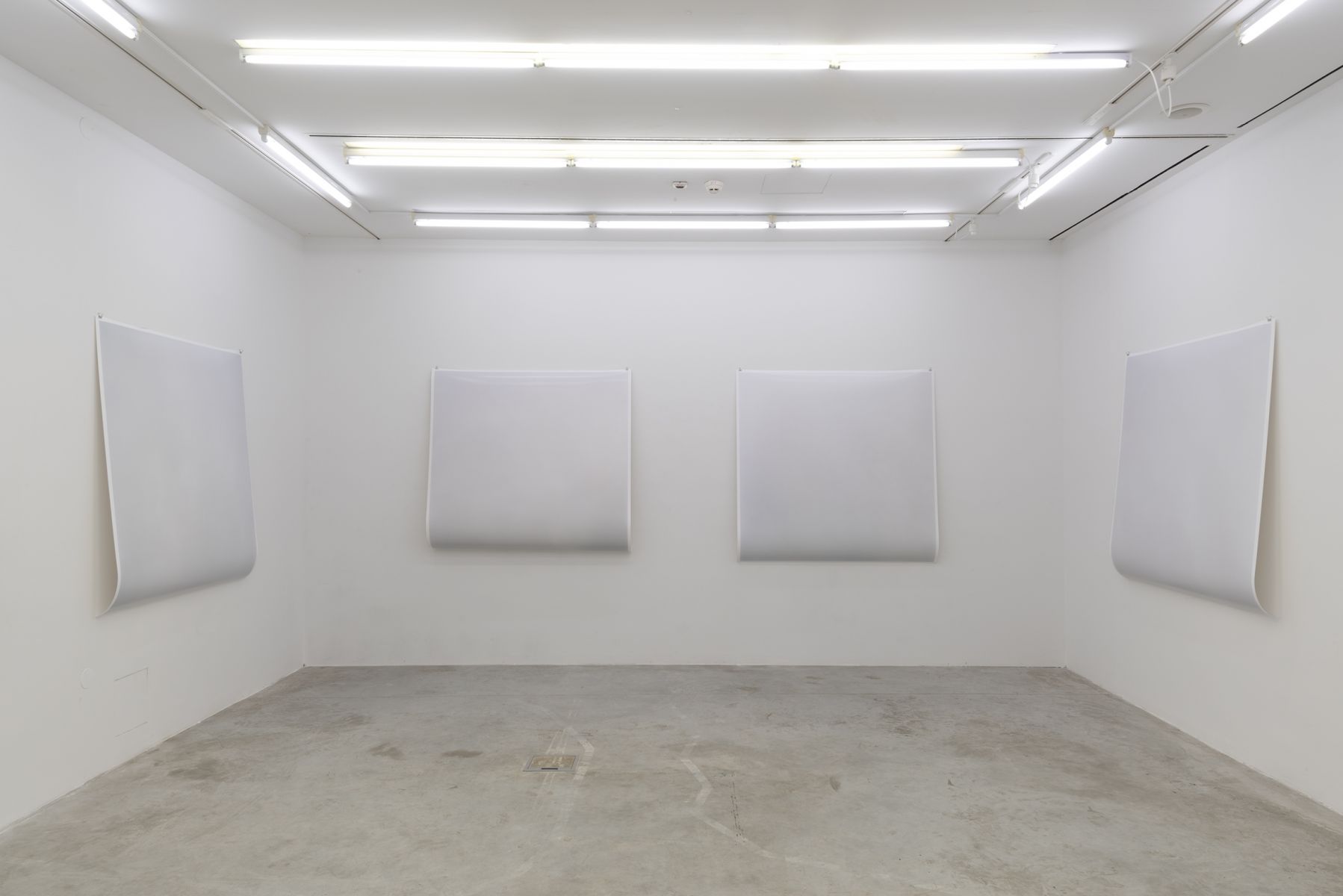
8 photographs, 152.4 × 152.4 cm, digital print on archival baryta paper, A.P. (from A.P. + 1)
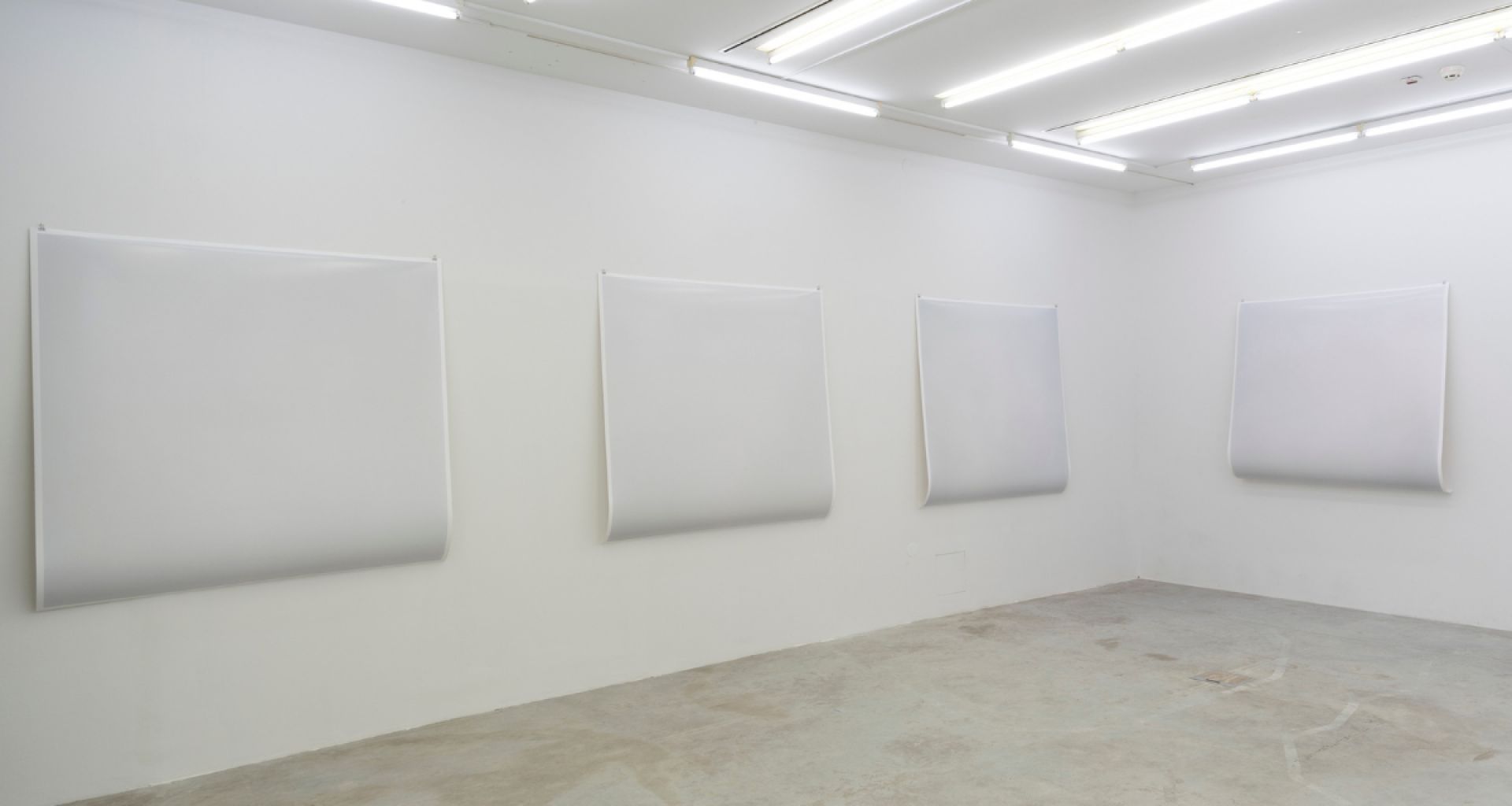
Lightroom is an installation consisting of 12 large square photographs of a cloudy sky, displayed in a bright “white cube” gallery space. From a distance, they appear as light gray monochrome surfaces, while up close the structure of film grain is revealed. Ideally, they are installed in a square space approximately 7 m by 7 m, with three photographs on each wall. The photographs correspond to twelve exposures on one roll of 120 film.
The work stems from an interest in the materiality of analog photography, its relationship to representation, and the connection between photography and cinematic logic. A film strip is by its nature temporal and sequential: it contains a limited number of shots taken over a specific period of time. In the case of Lightroom, all 12 photographs were taken in approximately one hour on a uniformly cloudy day, with one exposure every five minutes.
Although the photographs were taken sequentially, there are no distinctly visible changes between them. The chronological order is not emphasized; the images are selected and arranged according to spatial relationships. The work thus transforms a temporal sequence into a spatial experience. The “film” exists simultaneously as a whole, without beginning or ending, and its duration is determined by the viewer’s movement about the space.
The photographs were taken with a 6 × 6 Hasselblad camera on color negative film. Selected negatives were scanned, digitally processed, and printed as large archival pigment prints on baryta paper. The medium is therefore hybrid: part analog, part digital. The final tone and brightness of the photographs are not objective reproductions of the sky, but the result of subjective decisions tailored to the requirements of the installation.
Despite the deliberate homogenization, each photograph retains its individuality. It represents a unique atmospheric moment, separated from the others by time. The prints are attached to the wall with clips, which emphasizes the materiality of the paper, while a close-up view reveals the film grain and the structure of the print.
The space is illuminated by professional color control lamps, whose light roughly corresponds to the brightness of a cloudy day. This creates a subtle duplication between the photographed sky and the exhibition environment. As a whole, the installation functions as a kind of inverted camera: a condensed display of the material, technological and temporal processes of the photographic medium.